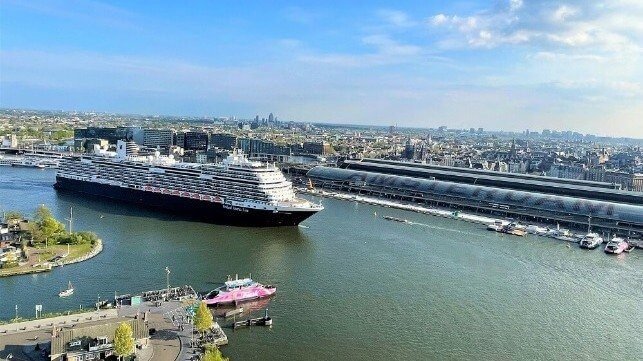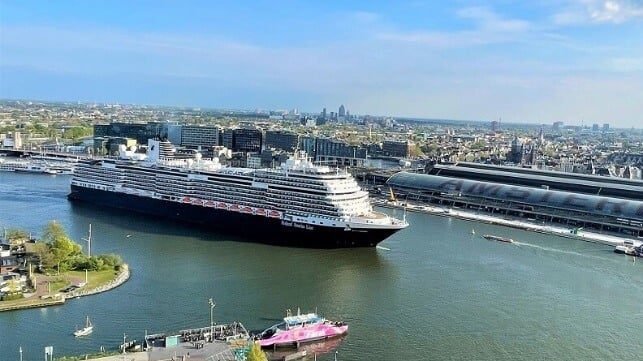
Amsterdam’s coalition government, including the mayor and aldermen, is reconsidering its approach to cruise ships in the city. Initially planning to limit and relocate these vessels, officials now suggest that it may be more economical to eliminate them entirely. A proposal has emerged to phase out ocean-going cruise ship port calls by 2035, while still allowing a limited number of river cruise ships.
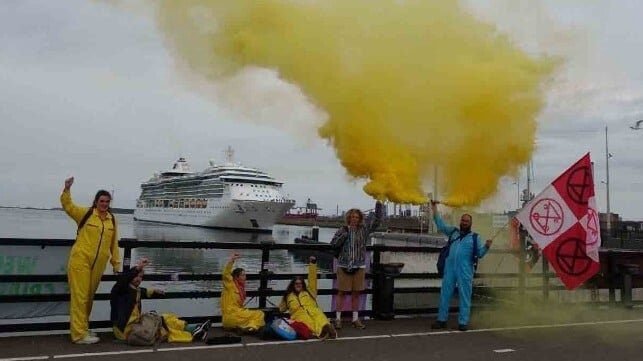
Concerns about pollution and overtourism have intensified over the past decade. Cruise ships, which have traditionally docked in the city center, are seen as significant contributors to environmental issues, emitting substantial CO2 and other pollutants. Critics, including environmental activists, argue that large cruise ships are highly damaging to the city’s air quality, despite the industry’s compliance with EU regulations on emissions and fuel standards.
The momentum for banning cruise ships has grown in 2023 and 2024, leading to a proposed limit of one ocean-going cruise ship per day starting in 2026. Additionally, plans for moving the cruise terminal east of the city by 2035 are under consideration, but the costs involved—estimated at €85 million—raise doubts about the feasibility of this relocation compared to the projected €46 million revenue from cruise ships over the next 30 years.
As Amsterdam prepares for upcoming elections, any final decisions regarding the cruise ship ban will rest with the newly elected city council. Other European cities, like Barcelona and various locations along the French Riviera, are also taking measures to mitigate the impact of cruise tourism, indicating a broader trend in addressing the challenges posed by these large vessels.
Share it now