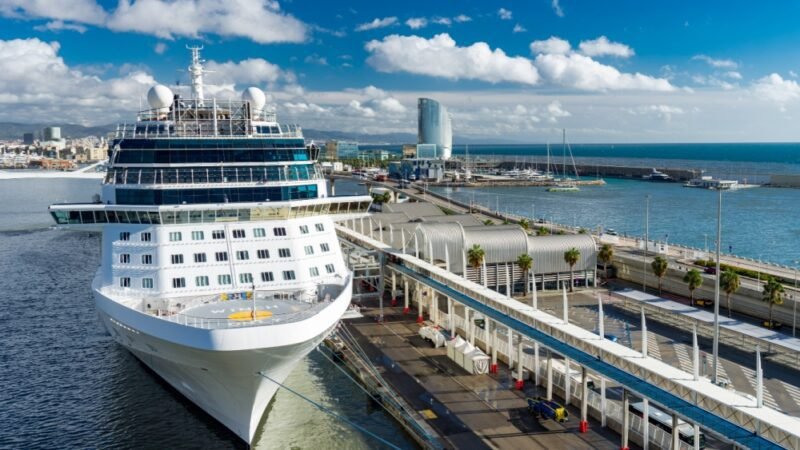
In 2024, EU ports welcomed 412.3 million passengers, marking a recovery from the pandemic-related downturn. This figure represents an increase of 18.8 million passengers, or 4.8%, compared to 2023, although overall traffic remains slightly below pre-pandemic levels, down 1.4% from 2019. Eurostat’s latest maritime passenger statistics reveal that ten countries, each exceeding 10 million passengers, accounted for a substantial 95.4% of total seaborne transport within the EU.
Italy led the way with 93.5 million passengers, making up 22.7% of the EU total, followed by Greece with 81.1 million (19.7%) and Denmark with 41.3 million (10.0%). Between 2019 and 2024, several top countries saw passenger increases, with Greece gaining 7.1 million and Italy 7.0 million. Conversely, Sweden, Finland, and Germany experienced notable declines in passenger numbers.
The busiest passenger ports in the EU were all located in Italy, with Messina topping the list at 11.4 million passengers, followed closely by Reggio di Calabria and Napoli. Napoli saw the most significant growth since 2019, while Helsinki recorded the largest decrease. Overall, the top ten busiest ports accounted for 22.1% of the EU’s maritime passenger traffic.