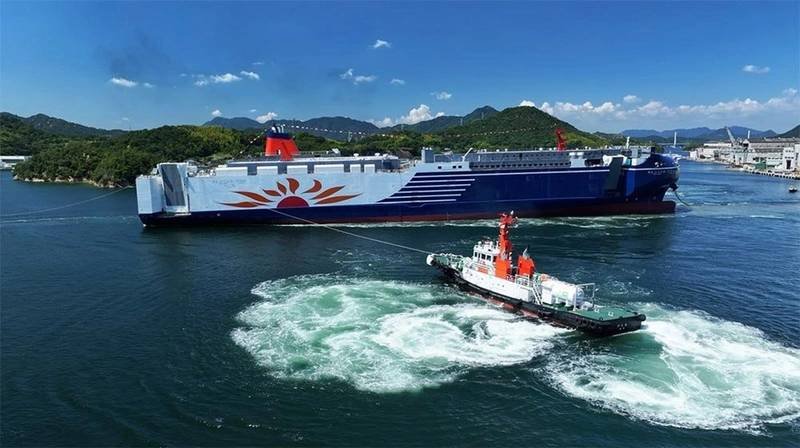
Long-distance ferry routes are vital to Japan’s transport infrastructure, linking its four major islands. Over the past two decades, the RoRo passenger (RoPax) ferry fleet has seen continuous renewal driven by freight demand, cost efficiency, and rising customer expectations. This focus has led to the construction of new vessels primarily in Japanese shipyards, supported by strong ties among local shipowners, builders, and suppliers.
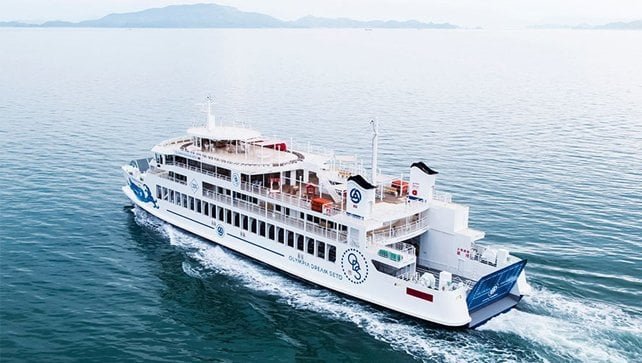
Recent investments have enhanced the competitiveness of sea transport, particularly as the government promotes a shift from congested highways to maritime routes for environmental and efficiency reasons. This shift has gained urgency due to a shortage of truck drivers. New-generation ferries now prioritize passenger comfort, reflecting a growing trend toward leisure travel.
The 14,157 gt Keyaki, launched in November, exemplifies this evolution, promising a 5% reduction in energy consumption compared to older models. It can accommodate 150 trucks, 30 cars, and 286 passengers. Additionally, the upcoming Sunflower Kamuy and Sunflower Pirka will utilize dual-fuel engines, significantly lowering emissions while serving freight routes between Hokkaido and Tokyo. As Japan’s ferry fleet modernizes, the focus remains on efficiency, comfort, and sustainability amidst evolving market demands.