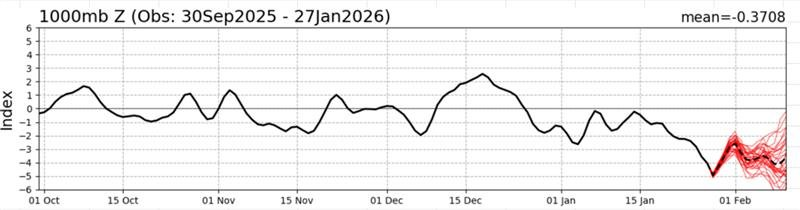
Powerful winter storms often have complex origins that start far from where they impact the ground. In March 2026, a significant winter storm in the Midwest was triggered by a shift in the Arctic atmosphere, leading to a breakdown in its usual stability. This change set off a chain reaction, allowing Arctic air to plunge southward, significantly altering weather patterns across the U.S. Meteorologists observed this development as the Arctic Oscillation dipped into its negative phase, causing the jet stream to weaken and dip further south.
As the Arctic air spread into the Midwest, it created a stark temperature contrast between sub-zero northern regions and milder southern areas. This contrast became the energy source for a low-pressure system that organized and intensified as long as the imbalance persisted. Local conditions, however, complicated the storm’s effects, with variations in terrain leading to different precipitation types, such as freezing rain instead of snow.
The storm’s intensity and duration were remarkable, fueled by the entrenched Arctic air mass and sustained temperature gradients. Early signals from the Arctic Oscillation can provide valuable lead time for preparedness, allowing organizations to assess risks and anticipate local impacts. Understanding the connection between large-scale weather patterns and localized effects is crucial for effective storm response and management.