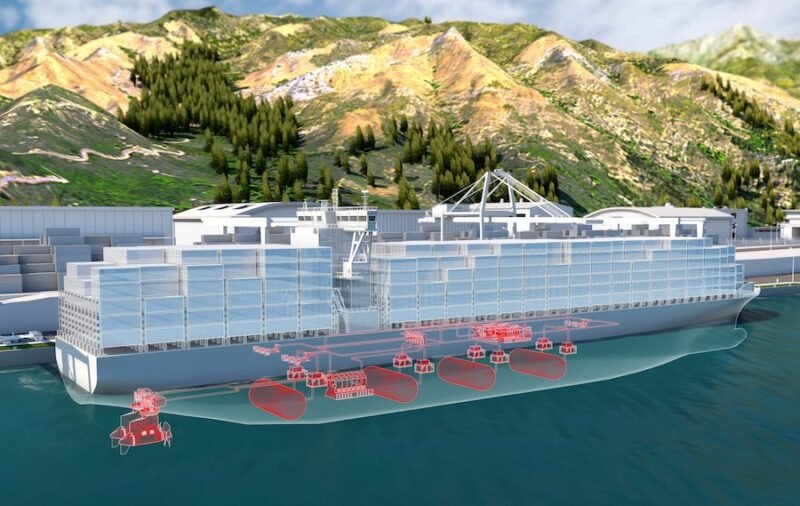
Genevos has announced its participation in the EU-supported HELENUS consortium, which aims to develop a modular Solid Oxide Fuel Cell (SOFC) power unit tailored for commercial shipping and cruise vessels. As part of the €15 million Horizon Europe initiative, Genevos will spearhead the development of the 100 kW XPM-100 module, envisioned as a foundational component for multi-megawatt marine power systems. The project aims for demonstrations aboard a German Aerospace Centre (DLR) research vessel, targeting a Technology Readiness Level of 7 by its conclusion.
The XPM-100 module is engineered for high efficiency, durability, and fuel flexibility, primarily designed for installations that utilize LNG or bio-methane. Genevos claims that this module can achieve efficiencies that significantly surpass those of traditional combustion engines, while also eliminating NOx, SOx, and particulate emissions. When implemented at scale, it has the potential to reduce greenhouse gas emissions by half.
Phil Sharp, CTO of Genevos, expressed pride in joining the HELENUS consortium, collaborating with leading research and shipping entities to advance SOFC technology. Dr. Dheeraj Gosala from DLR highlighted that Genevos’ involvement enhances the consortium’s ability to meet its ambitious objectives and promote zero-emission technologies.
The scalable, modular SOFCs powered by LNG or bio-methane represent a viable pathway toward deep decarbonization for energy-intensive shipping and cruise operations.
Share it now