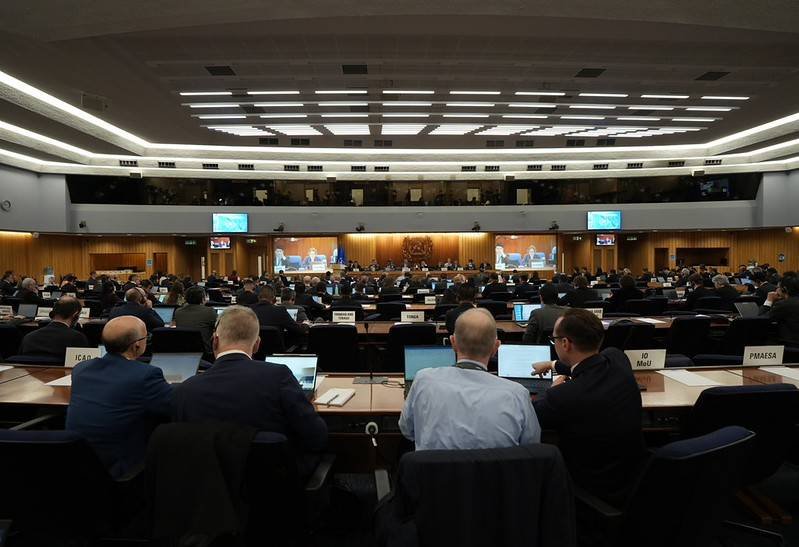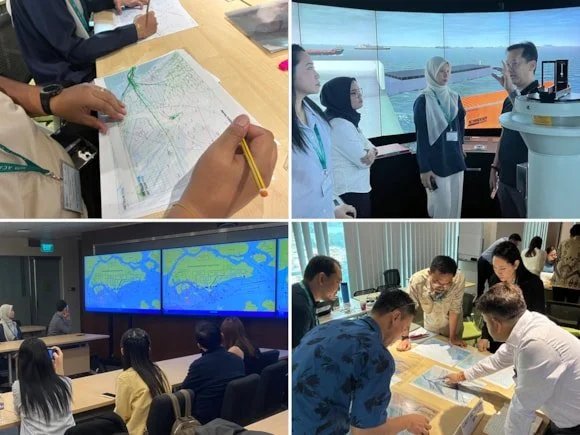
Government officials and maritime experts from Asian coastal states convened in Singapore from February 2-6 for the inaugural International Maritime Organization (IMO) workshop focused on ships’ routing and reporting systems. The primary goal of the workshop was to enhance regional expertise in navigational safety, IMO protocols, and the effective application of these systems, especially in coastal areas facing rising maritime traffic.
Ships’ routing involves adhering to established pathways for maritime transport, aimed at organizing traffic in congested or complex sea zones. This practice enhances navigation safety, improves traffic flow, and minimizes risks in areas with high traffic density or challenging conditions. Key topics discussed included reviewing current routing measures, designing effective systems for both national and international waters, and understanding traffic patterns and navigational risks.
The workshop combined theoretical training with hands-on activities, including visits to the Vessel Traffic Information System (VTIS) operations center and the Integrated Simulation Centre (ISC) managed by the Maritime and Port Authority of Singapore (MPA). Participants explored the use of Automatic Identification System (AIS) data to support reporting requirements, highlighting its potential to streamline communications and focus on navigation.
Emphasizing the importance of aligning routing measures with the rights of international shipping under the UNCLOS and SOLAS conventions, the workshop is anticipated to serve as a model for future training initiatives. It aims to bolster navigational safety and mitigate marine pollution through effective routing and reporting systems, delivered under the IMO Integrated Technical Cooperation Programme (ITCP) in collaboration with the MPA.
Share it now