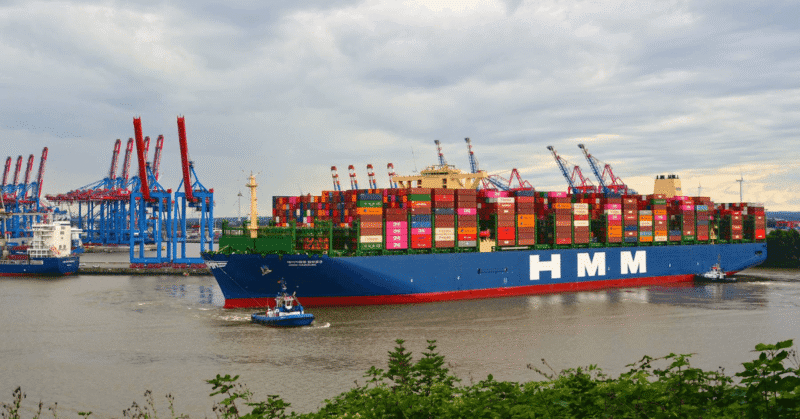
Researchers at Texas A&M University have created an innovative AI system designed to assist ship captains in preventing dangerous maritime collisions. Named SMART-SEA, which stands for “Ship collision avoidance of Machine learning And Radar Technology for Stationary Entities and Avoidance,” this technology aims to lessen the dependency on a captain’s experience by offering real-time guidance through a “human-in-the-loop” advisory system. This fusion of human knowledge and AI accuracy is intended to enhance safety and ease maritime navigation.
Led by Dr. Mirjam Fürth, the project was developed under a one-year contract with the US Department of the Interior and the Department of Energy, facilitated by the Ocean Energy Safety Institute. SMART-SEA specifically targets the reduction of collisions attributed to human error, a growing concern as incidents between vessels and stationary structures, like oil rigs, become more frequent. The system’s design acknowledges the complexities of maritime navigation, which involves numerous unpredictable factors compared to road travel.
SMART-SEA leverages advanced machine learning and radar imaging to identify both moving and stationary objects, even in challenging weather conditions. By utilizing state-of-the-art computational fluid dynamics and historical vessel motion data, the system aims to enhance navigational safety. The underlying logic combines insights from maritime professionals with sophisticated algorithms, ensuring compliance with International Regulations for Preventing Collisions at Sea (COLREGs).