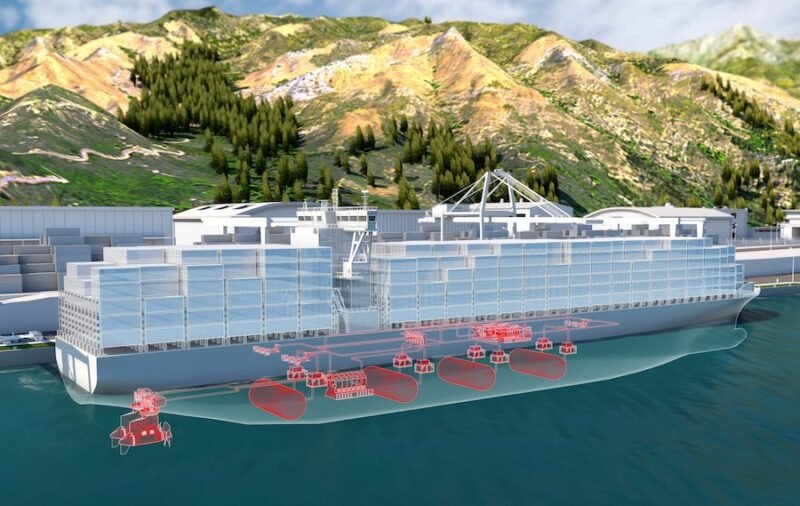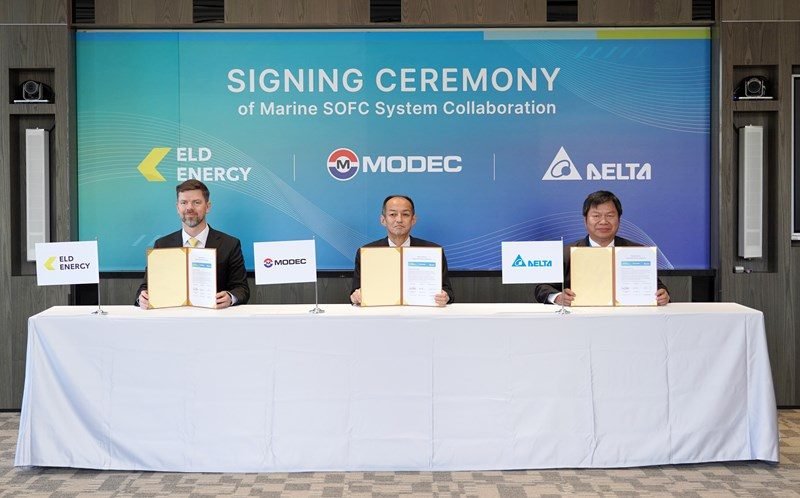
Three companies—Japan’s MODEC, Norway’s Eld Energy, and Delta Electronics—are collaborating to enhance hydrogen utilization in the maritime sector. This partnership marks the inaugural deployment of solid oxide fuel cell (SOFC) technology on a floating production, storage, and offloading (FPSO) vessel, aimed at facilitating the energy transition.
MODEC and Eld Energy previously combined efforts to develop a scalable multi-megawatt power system for FPSO units, focusing on zero-carbon energy. Delta Electronics has now joined this initiative, agreeing to supply solid oxide stacks, power conditioning systems, and converters for Eld Energy’s integrated SOFC system tailored for FPSO applications. Dr. Charles Tsai, General Manager of Delta’s Hydrogen Energy Division, emphasized the company’s commitment to innovative, energy-efficient solutions that support industries in their low-carbon transitions.
The collaboration aims to create a comprehensive hydrogen solution, encompassing everything from fuel cells to power management systems, to be implemented on a newly constructed FPSO. The partners plan to initiate a pilot trial of a 120 kW SOFC system by 2027, which will be the first of its kind in the maritime sector, setting the stage for hydrogen energy integration.
Koichi Matsumiya, CTO of MODEC, highlighted the importance of this partnership in achieving stable offshore power while reducing carbon emissions. Meanwhile, Hans Fredrik Lindøen-Kjellnes, CEO of Eld Energy, noted that integrating Delta’s solid oxide stacks into their systems would enhance efficiency and stability, further promoting maritime decarbonization. Mass production of Delta’s SOFC technology is expected to commence by late 2026, aiming for over 60% power generation efficiency.
Share it now