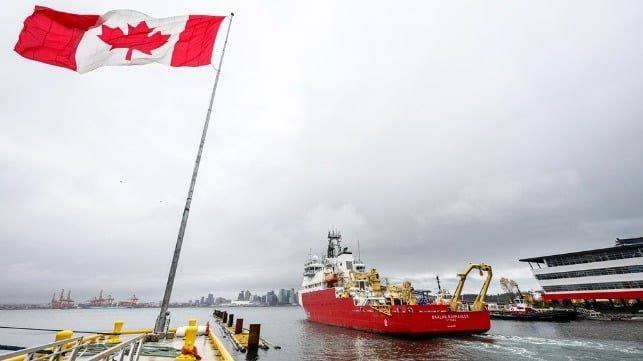
Canadian shipbuilder Seaspan has officially delivered the CCGS Naalak Nappaaluk, which will serve as the new flagship for Canada’s scientific fleet. Named after an Inuit elder from Nunavik, this vessel replaces the decommissioned CCGS Hudson, which had been in service for 59 years before its retirement in 2022. Although Naalak Nappaaluk was intended to fill the gap left by Hudson seamlessly, its delivery faced numerous delays due to the pandemic and changes in the National Shipbuilding Strategy’s priorities, ultimately arriving eight years late and significantly over budget.
As the primary platform for oceanographic research for Fisheries and Oceans Canada, the Naalak Nappaaluk is also equipped to assist the Canadian Coast Guard in search and rescue operations and sovereignty missions. Weighing 5,000 tonnes, the vessel boasts multiple laboratory spaces, a seawater sampling system, a drop keel with sensors, and an A-frame for deploying equipment. Designed for light ice operations, it is well-suited for Arctic conditions.
Seaspan highlighted the delivery as a significant achievement for the National Shipbuilding Strategy (NSS), despite the project’s costs soaring from an initial budget of approximately US$80 million to a final price of US$910 million. This represents one of the largest percentage cost overruns in recent shipbuilding history and underscores the financial challenges of revitalizing national shipbuilding capabilities.
Joël Lightbound, Minister of Government Transformation, emphasized that the delivery of the Naalak Nappaaluk not only creates high-quality jobs but also strengthens the shipbuilding industry and enhances the Coast Guard’s scientific and operational abilities. Following delivery, the vessel will head to Patricia Bay for training before making its way to the Bedford Institute of Oceanography in Halifax, Nova Scotia, where it will be homeported.
Share it now