AI-Powered Radar Tech Launched for Collision Avoidance in Maritime Navigation

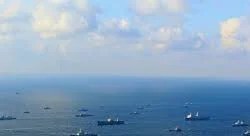
Researchers at Texas A&M University have developed SMART-SEA, an AI system aimed at preventing maritime collisions. This technology combines human expertise with machine learning and radar technology to provide real-time guidance, reducing reliance on captain experience. It specifically addresses human error, enhancing safety in complex maritime navigation scenarios.

Continue reading
Greece nano satellite MICE-1

Greece Launches Nanosatellite to Boost Maritime IoT Communications

Greece has successfully launched its first IoT nanosatellite, MICE-1, aboard a Falcon 9 rocket on November 28. Developed by Prisma Electronics, this satellite enhances maritime communication and operational responses during disasters. Equipped with advanced technology, MICE-1 promotes sustainable shipping practices and marks a significant milestone for Greece’s space capabilities.

Continue reading

Danish Shipping Launches Five-Year Plan to Boost Seafarer Skills

Danish Shipping has launched its five-year strategy, “Charting the Course,” to position Denmark as a leading hub for shipping. Key objectives include expanding the Danish-flagged merchant fleet, increasing the number of trained seafarers, and enhancing maritime education. The strategy emphasizes sustainability and adapting to global regulatory frameworks for shipping.

Continue reading

Myanmar Seafarers Federation Introduces Complimentary Maritime English Course

The Myanmar Seafarers Federation (MSF) has launched a free maritime English class for aspiring seafarers, running from January 5 to January 16. With 50 spots available, participants can register via QR code. Those unable to attend the first batch can re-register for future classes, enhancing vital communication skills in the industry.

Continue reading

MARINA Clarifies Basic Training Requirements and BT-PSSR Updates for Seafarers

The Maritime Industry Authority (MARINA) clarified that seafarers with a valid Basic Training Certificate can board vessels without completing the Updating Basic Training–Personal Safety and Social Responsibility immediately. MARINA Administrator Sonia Malaluan emphasized that updating is required before the next embarkation or revalidation, addressing confusion among seafarers about immediate compliance.

Continue reading

India’s Indigenous Pollution Control Vessel Samudra Pratap Commissioned by Defence Minister Rajnath Singh

Defence Minister Rajnath Singh recently commissioned the Indian Coast Guard’s first indigenously designed pollution control vessel, ‘Samudra Pratap’, in Goa. This advanced 114.5-meter vessel, built by Goa Shipyard Limited, emphasizes India’s commitment to self-reliance, boasting over 60% indigenous content and enhanced capabilities for marine pollution enforcement and search and rescue operations.

Continue reading
IMO Secretary-General Sets 2026 Priorities

IMO Secretary-General Sets Key Focus Areas for 2026

In a recent video message, IMO Secretary-General Arsenio Dominguez outlined key priorities for 2026, emphasizing “From Policy to Practice – Powering Maritime Excellence.” He highlighted the need for updated training for seafarers and reaffirmed the IMO’s commitment to reducing greenhouse gas emissions and supporting the High Seas Treaty for ocean protection.

Continue reading

Indian Coast Guard’s Growing Deterrence Against Maritime Threats

On January 5, 2026, Defence Minister Rajnath Singh highlighted the Indian Coast Guard’s pivotal role in coastal security during the commissioning of the ‘Samudra Pratap’. He emphasized India’s commitment to maritime peace and environmental stewardship, urging the ICG to enhance operational standards and set benchmarks in global maritime governance.

Continue reading

Japan Launches First-of-its-Kind Floating Wind Farm

Japan’s Goto Floating Wind Farm began commercial operations on January 5, marking a pivotal step in renewable energy. As the country’s first floating wind farm, it utilizes innovative hybrid technology. Located near Nagasaki, this project aims to support Japan’s ambitious offshore energy goals, contributing significantly to future renewable initiatives.

Continue reading
Advertisements