AVAT, KBB Aim To 'Digitalize' Turbochargers

Collaboration to Enhance Turbocharger Technology Through Digital Solutions

German technology companies AVAT and Kompressorenbau Bannewitz GmbH (KBB) have joined forces to revolutionize turbocharger technology for large combustion engines. Through digitalization, they aim to enhance operational efficiency, prevent costly failures, and improve predictive maintenance practices. This innovative collaboration signifies a significant step towards leveraging data analytics to optimize equipment performance and reliability.

Continue reading

Singapore Methanol Collaborates to Promote Sustainable Marine Fuel Solutions

Global Energy Overseas, a subsidiary of Global Energy International, has partnered with Singapore Methanol to promote bio-methanol as a sustainable maritime fuel option. The collaboration aims to reduce greenhouse gas emissions and meet carbon intensity reduction goals in the shipping industry. This partnership will advance Singapore’s position in the global green methanol landscape.

Continue reading

India’s Autonomous Vessel Completes Historic 1,500-Km Journey Enhancing Maritime Security

An autonomous surface vessel by Sagar Defence Engineering completed a 1,500-km journey from Mumbai to Thoothukudi without human intervention, backed by the Indian Navy. Named ‘Sagarmala Parikrama’, this milestone showcases India’s progress in autonomous maritime technology. This initiative highlights India’s commitment to developing cutting-edge unmanned systems for national security, supported by the Navy’s various wings.

Continue reading

Kawasaki Installs WAAM 3D Printed Propeller on Vessel

Wire Arc Additive Manufacturing (WAAM) is revolutionizing the marine industry by producing durable, high-performance parts quickly. Kawasaki Heavy Industries and Pelagus 3D showcased WAAM technology by installing a Nickel Aluminium Bronze propeller blade on the BW Epic Kosan vessel, Epic Salina. This demonstrates WAAM’s potential in reshaping marine spare parts production efficiently and effectively.

Continue reading
Reducing Complexity In Marine Winches With Powertrain

Innovative Marine Winch Design Enhances ROV Operations and Efficiency

Jesse Dupuis, Director of Powertrain Product Management at Regal Rexnord, discusses a collaboration with an international engineering technology company to design a marine winch for controlling, lifting, and retrieving remote operated vehicles (ROVs) on sea vessels. The winch was specifically needed to lift a hull cleaner ROV to remove fouling on ship hulls.

Continue reading

India’s Sustainable Shipping Future through Green Shipping and Inclusivity Goals

India, despite its lag in ship numbers, is poised for growth in sustainable shipping. Umesh Sharad Wagh highlighted the private sector’s role in India’s 2047 vision, emphasizing government support. Panelists discussed the potential of the east coast, importance of cost-efficient logistics, and the need for incentives to invest in green vessels.

Continue reading
DP World increases fleet safety with advanced ESC technology

DP World Enhances Fleet Safety Through Advanced ESC Technology

DP World has launched a new fleet of prime movers with Electronic Stability Control (ESC) technology, setting a new standard in safety and efficiency. The ESC system ensures stability in challenging conditions, while the Tail Guarding System helps prevent collisions. DP World’s commitment to safety and innovation showcases its dedication to excellence in the industry.

Continue reading

Call to Update International Medical Guide for Ships to Enhance Seafarer Healthcare

Marine Medical Solutions, led by CEO Dr. Jens Tülsner, calls for an updated International Medical Guide for Ships. Highlighting the guide’s importance in providing medical care on ships, Tülsner stresses the need for incorporating medical advancements. Advocating for involvement of medical professionals, he emphasizes the importance of updated guidelines for the well-being of seafarers.

Continue reading

New GMDSS Certification Rules Promote Maritime Safety and Communication in India

On October 29, 2024, new rules were introduced to improve maritime safety and communication during distress situations. The rules require operators of the Global Maritime Distress and Safety System (GMDSS) to obtain a certificate by meeting specific criteria. Applications can be made online with a fee, and successful candidates will receive a provisional certificate.

Continue reading
IMO Secretary-General Visits Yemen

IMO Secretary-General Visits Red Sea to Support Seafarers and Freedom of Navigation

IMO Secretary-General Arsenio Dominguez recently visited countries in the Red Sea area to address the current situation and show support for freedom of navigation. He expressed concern for innocent seafarers, particularly those held captive on the MV Galaxy Leader by Yemen’s Houthis. Dominguez highlighted the impact of continuous attacks on ships and seafarers.

Continue reading

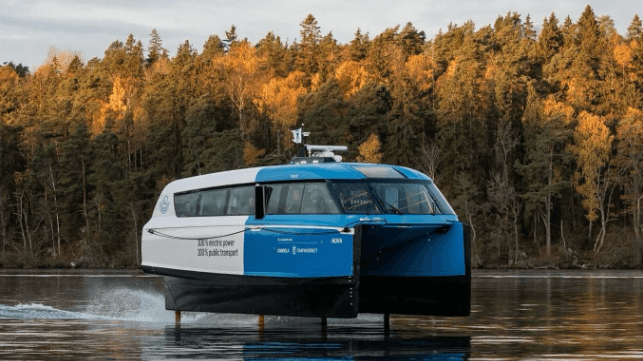
World’s Fastest Hydrofoil Electric Ferry Launched in Stockholm

Swedish startup Candela has launched its hydrofoil electric ferry, Nova, which is now in operation. The 30-passenger ferry traveled from Tappström to Stockholm’s City Hall in just 30 minutes, covering a 15-kilometer route. Powered by electric motors, Nova is the fastest electric ferry globally, cruising at 25 knots above the water’s surface.

Continue reading

HD Hyundai Launches Autonomous Operations on Large Containership

South Korean shipbuilder HD Hyundai Heavy Industries is leading a demonstration of autonomous operations on a large containership as part of a government-sponsored program. Equipped with specially designed systems, the vessel is showcasing autonomous collision avoidance and remote control capabilities. The initiative aims to advance technology development and establish international standards for autonomous shipping.

Continue reading

Geofence System Launched at Port of Rotterdam to Boost Efficiency and Reduce CO2 Emissions

The Port of Rotterdam has implemented a Geofence system to optimize ship movements and reduce CO2 emissions. Ships entering the designated area receive automatic notifications, minimizing wait times and improving efficiency. Research shows a potential 4.23% reduction in emissions and fuel consumption. This initiative highlights a commitment to collaboration for a greener maritime industry.

Continue reading
Advertisements