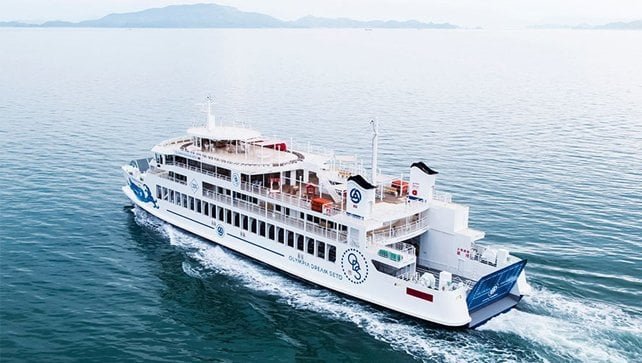
Japan is ready with its first autonomous navigation ferry, the Olympia Dream Seto, which has recently completed its licensing process. The vessel operations, as part of a government initiative aimed at enhancing autonomous navigation technology. A demonstration hosted by the Nippon Foundation showcased the ferry’s capabilities, including its ability to navigate and reroute when detecting obstacles, marking a significant advancement in this field.
The Olympia Dream Seto, built in 2019, is the first vessel to emerge from the MEGURI 2040 project, initiated in 2020. It operates a 70-minute route between Shin-Okayama Port and Tonosho Port, accommodating up to 500 passengers and 60 cars or 10 buses, while traveling at a speed of 13 knots with a crew of 10. The project aims to reduce accidents linked to human error and address the shortage of seafarers, targeting 50% unmanned operations for domestic vessels by 2040.
Demonstrations conducted between January and March 2022 included tests in Tokyo Bay, known for its heavy traffic, and a long-distance journey of over 460 miles. To ensure safety, Japan’s Ministry of Land, Infrastructure, Transport and Tourism established a study group in 2024, leading to the ferry’s certification as an “early-stage autonomous ship” following successful inspections.
As the Olympia Dream Seto begins its operations, the MEGURI project continues to develop additional vessels, including the containership Mikage and the RoRo ship Hokuren Maru No. 2, both of which are preparing for certification and demonstration voyages. These initiatives are expected to advance the future of autonomous maritime operations by April 2026.
Share it now