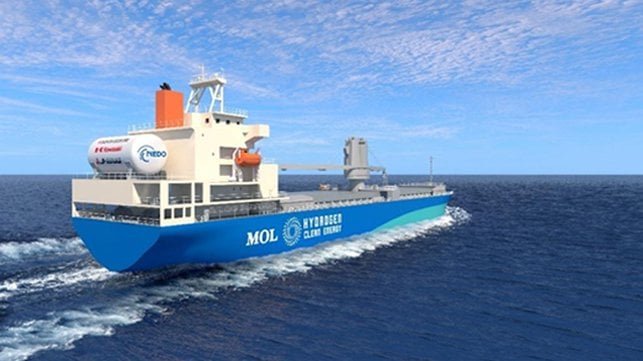
Japan has achieved a significant milestone in marine technology with the development of a large hydrogen-fueled engine by Japan Engine Corporation, in collaboration with Kawasaki Heavy Industries. This engine is part of a demonstration project aimed at creating an ocean-going vessel, marking a notable advancement since most hydrogen initiatives have focused on smaller engines for coastal vessels. The project signifies a pivotal step toward the practical application of hydrogen as a fuel source for larger ships.
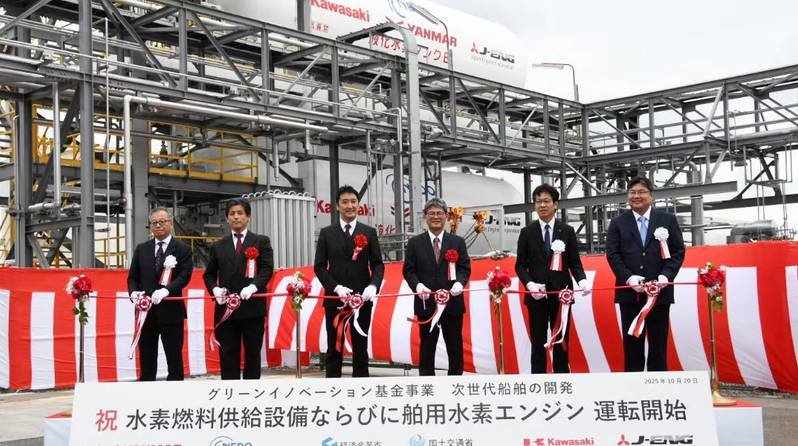
Currently, most hydrogen projects in Japan are concentrated on short-distance operations, primarily for sightseeing boats and tugboats using compressed hydrogen. While some experimental systems have been tested on cruise ships, the collaboration between Fincantieri and Viking is notable for integrating hydrogen propulsion into upcoming cruise vessels. Japan Engine Corporation has begun testing a large, low-speed, two-stroke hydrogen engine, achieving a hydrogen co-firing ratio exceeding 95% at full load, indicating both greenhouse gas reduction benefits and stable performance.
This engine development is part of a government-backed initiative through the New Energy and Industrial Technology Development Organization (NEDO). The project aims to install the engine in a 17,500 dwt hydrogen-fueled multi-purpose vessel designed by Onomichi Dockyard, utilizing a fuel system from Kawasaki. Scheduled for operational demonstrations starting in FY2028, this project is poised to position hydrogen as a viable alternative fuel for ocean-going ships.