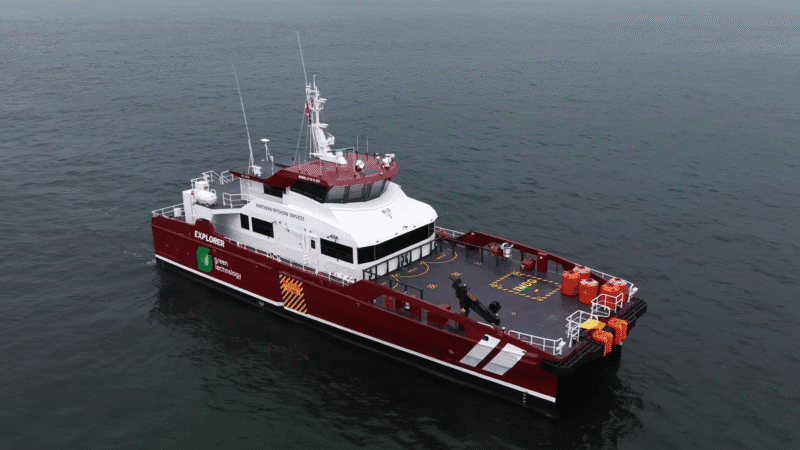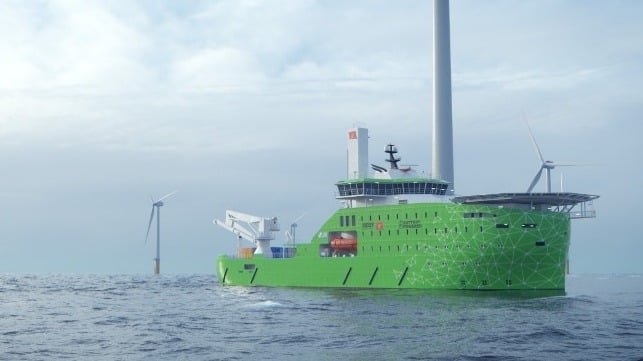
The Offshore Charging Working Group, a diverse coalition from the offshore wind and maritime sectors, aims to eliminate barriers to decarbonizing offshore service operations by electrifying service operation vessels (SOVs) and crew transfer vessels (CTVs). The group has identified early design considerations and the need for clear commercial access to offshore power for charging as critical challenges that remain.
This coalition includes vessel owners, technology providers, and industry organizations, with backing from leading wind farm developers. Their collective goal is to facilitate the operation of electric CTVs and SOVs within offshore wind farms. The industry’s readiness to adopt zero-emission vessels is increasing, contingent upon the establishment of a clear and effective policy framework.
Engagement with key stakeholders such as The Crown Estate, the UK Department for Energy Security and Net Zero (DESNZ), and the Low Carbon Contracts Company (LCCC) has underscored the necessity for design allowances in early Front-End Engineering Design (FEED) phases, as well as clarity regarding offshore power access and pricing under the Contracts for Difference (CfD) scheme.
Øystein Huglen, representing Maritime CleanTech within the group, emphasized that technology is no longer the limiting factor. Instead, the industry requires practical guidance from authorities to transition offshore charging from concept to reality. A detailed proposal outlining policy enablers for offshore charging will be released soon.
Share it now