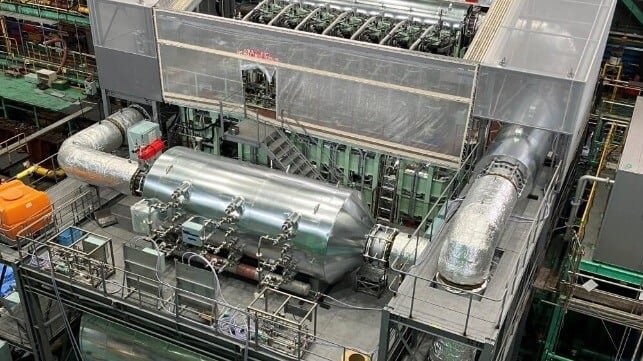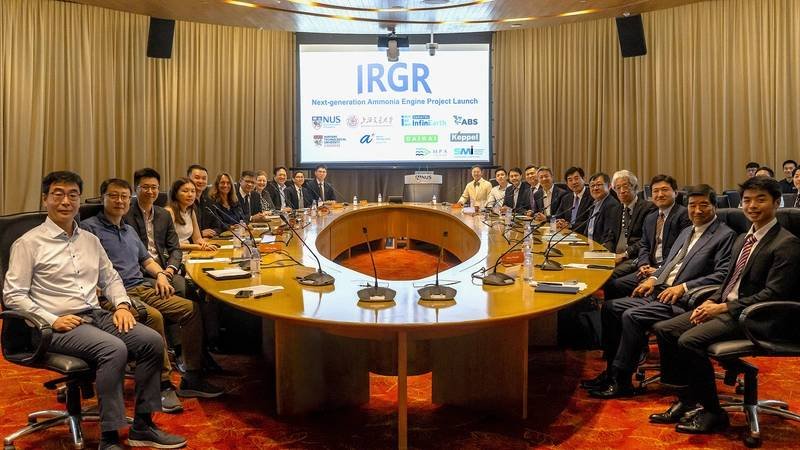
A new research initiative at the National University of Singapore (NUS) seeks to expedite the decarbonization of the global shipping sector by developing next-generation ammonia-fueled marine engines that promise high efficiency and near-zero emissions. The project introduces an innovative in-cylinder reforming gas recirculation (IRGR) engine concept aimed at overcoming existing barriers to ammonia’s adoption as a marine fuel.
Project leader Associate Professor Yang Wenming emphasized that this design enhances combustion efficiency while significantly minimizing unburned ammonia and other pollutants. The initiative not only focuses on technological advancements but also aims to bolster Singapore’s role as a center for maritime innovation and sustainable shipping technologies.
The consortium features collaboration with Shanghai Jiao Tong University, Nanyang Technological University, the A*STAR National Metrology Centre, and Keppel Energy Nexus, along with industry partners Daihatsu and the American Bureau of Shipping (ABS).
Spanning three years, the project aims to develop scalable engine concepts that could facilitate the global deployment of low- and zero-emission vessels, marking a significant step toward a more sustainable maritime industry.
Share it now
Related posts:
 Ammonia-Fueled Bunkering Vessel Receives Approval-in-Principle for Sustainable Maritime Energy Transition
 Japan Engine Corporation Advances Ammonia-Fueled Shipping Engine Development
 Ammonia-Fueled Bulk Carrier Venture Launched in Norway
 Collaboration to Develop Next-Generation Ammonia-Fueled Gas Carrier for Zero-Carbon Shipping