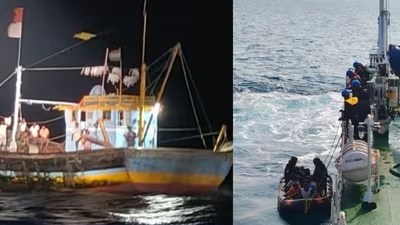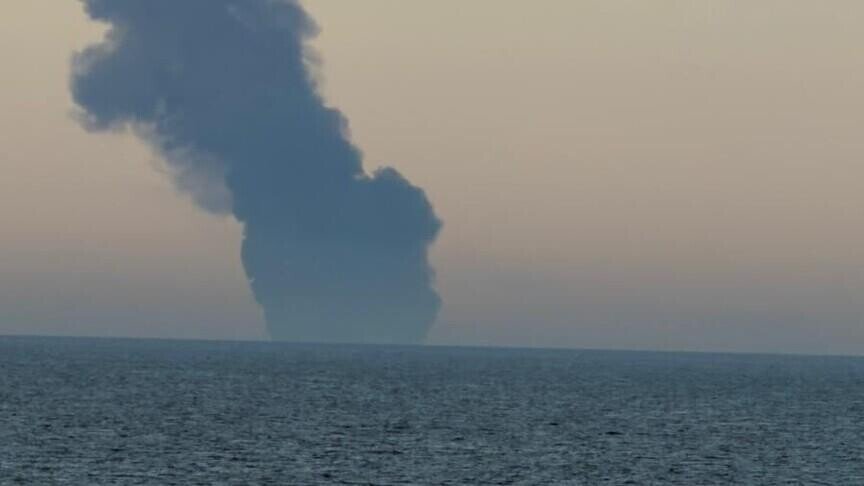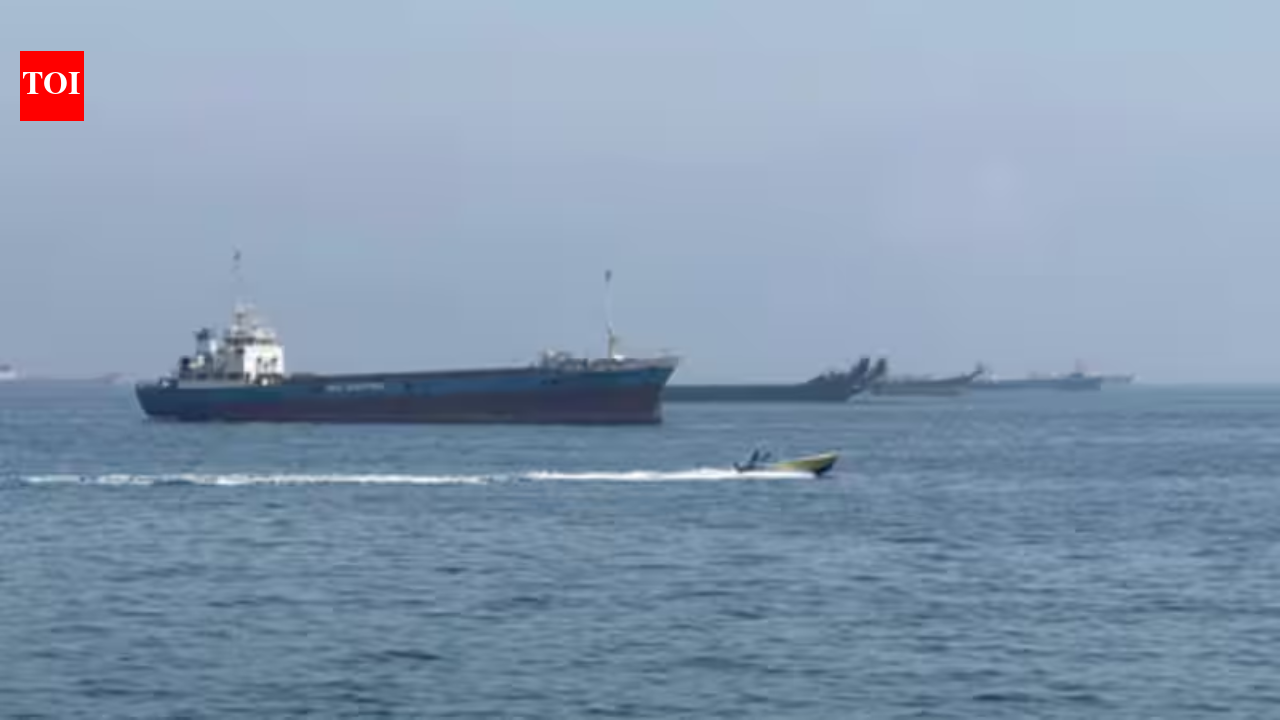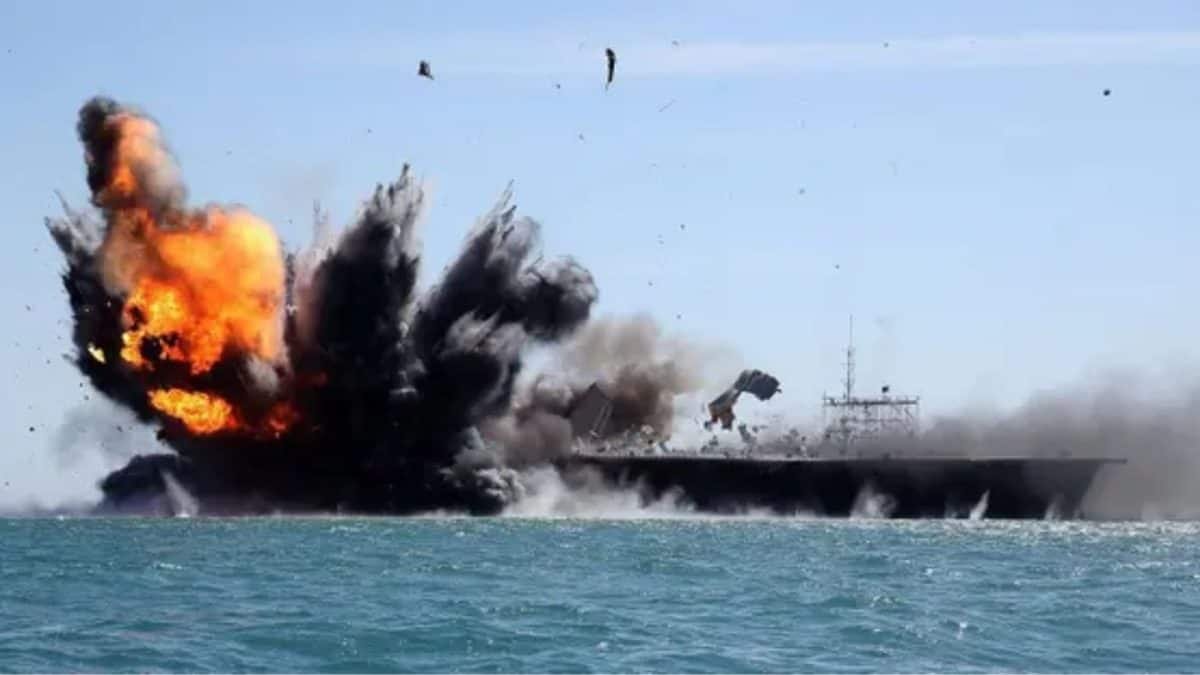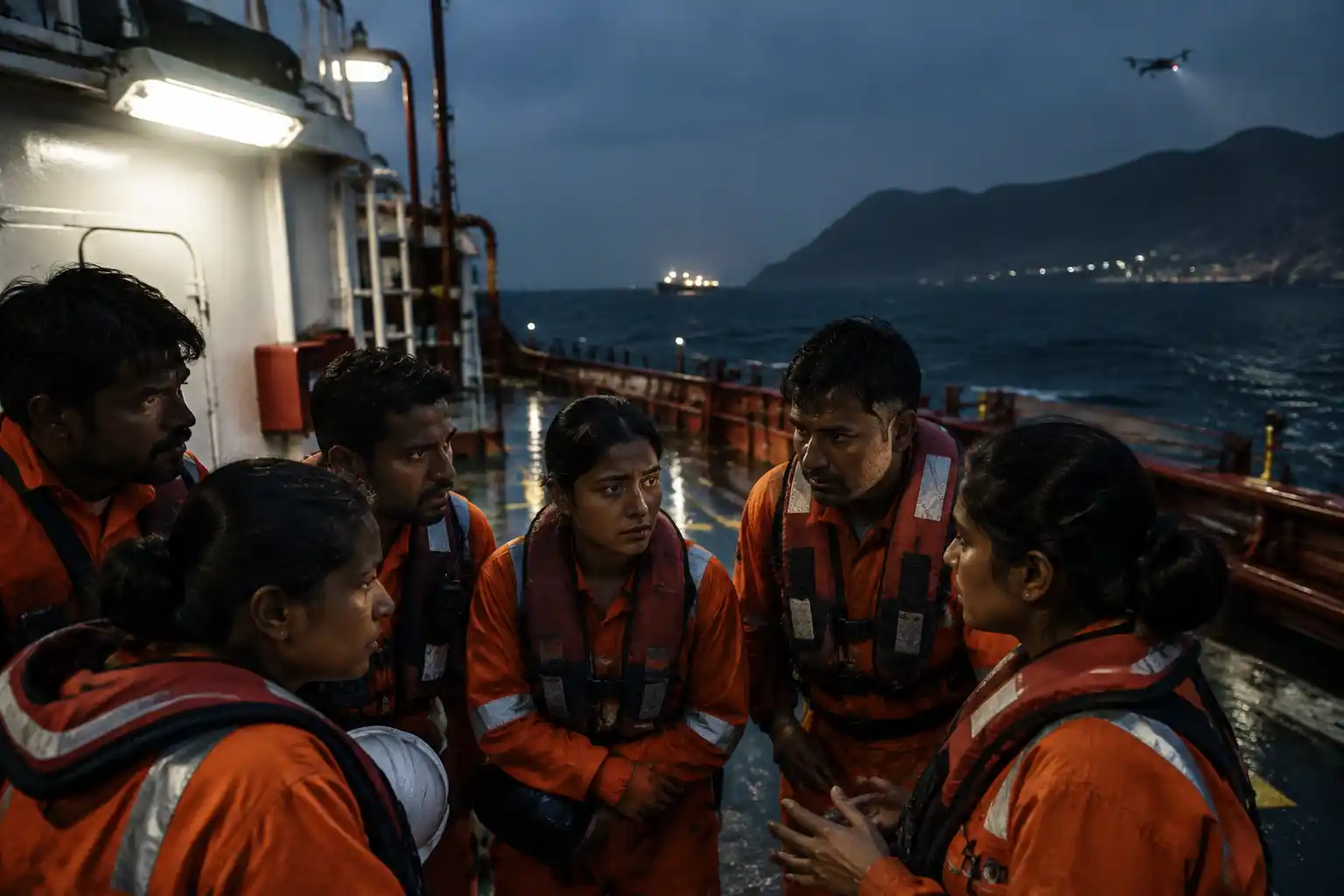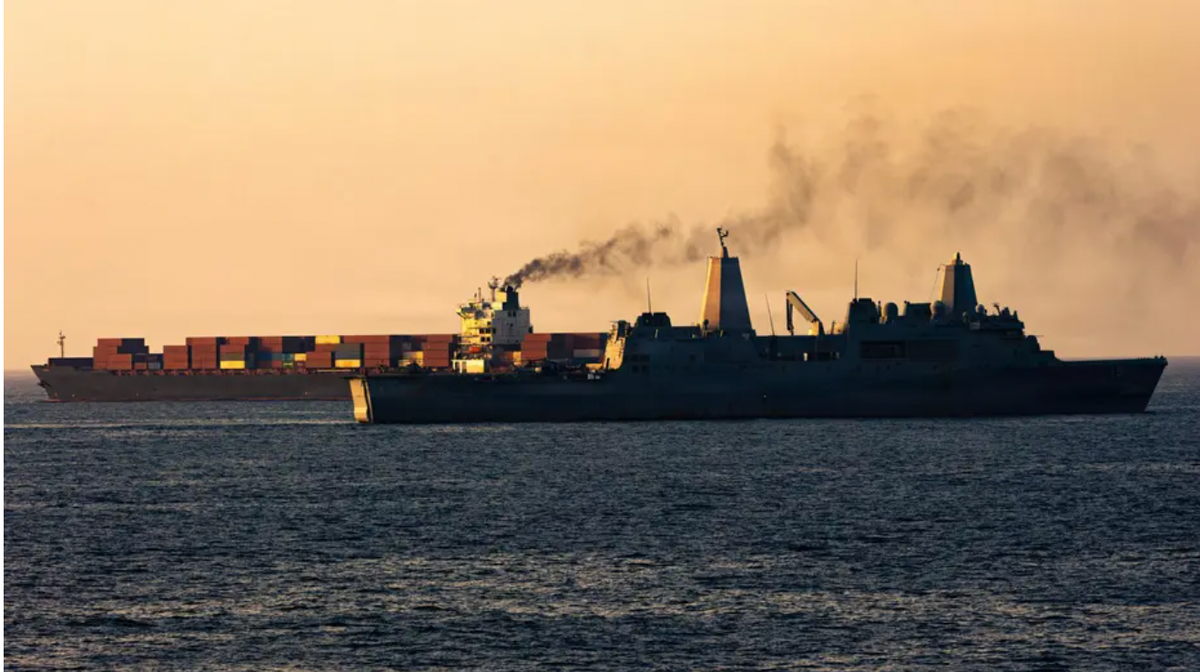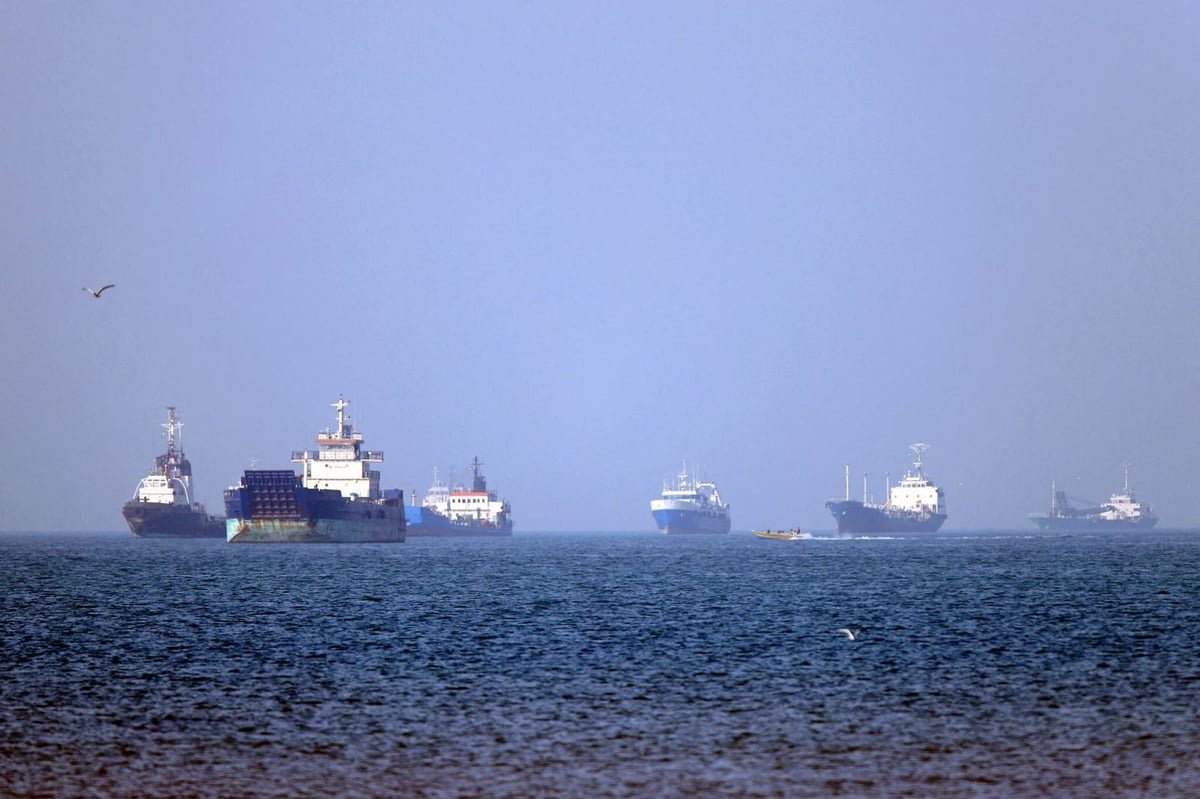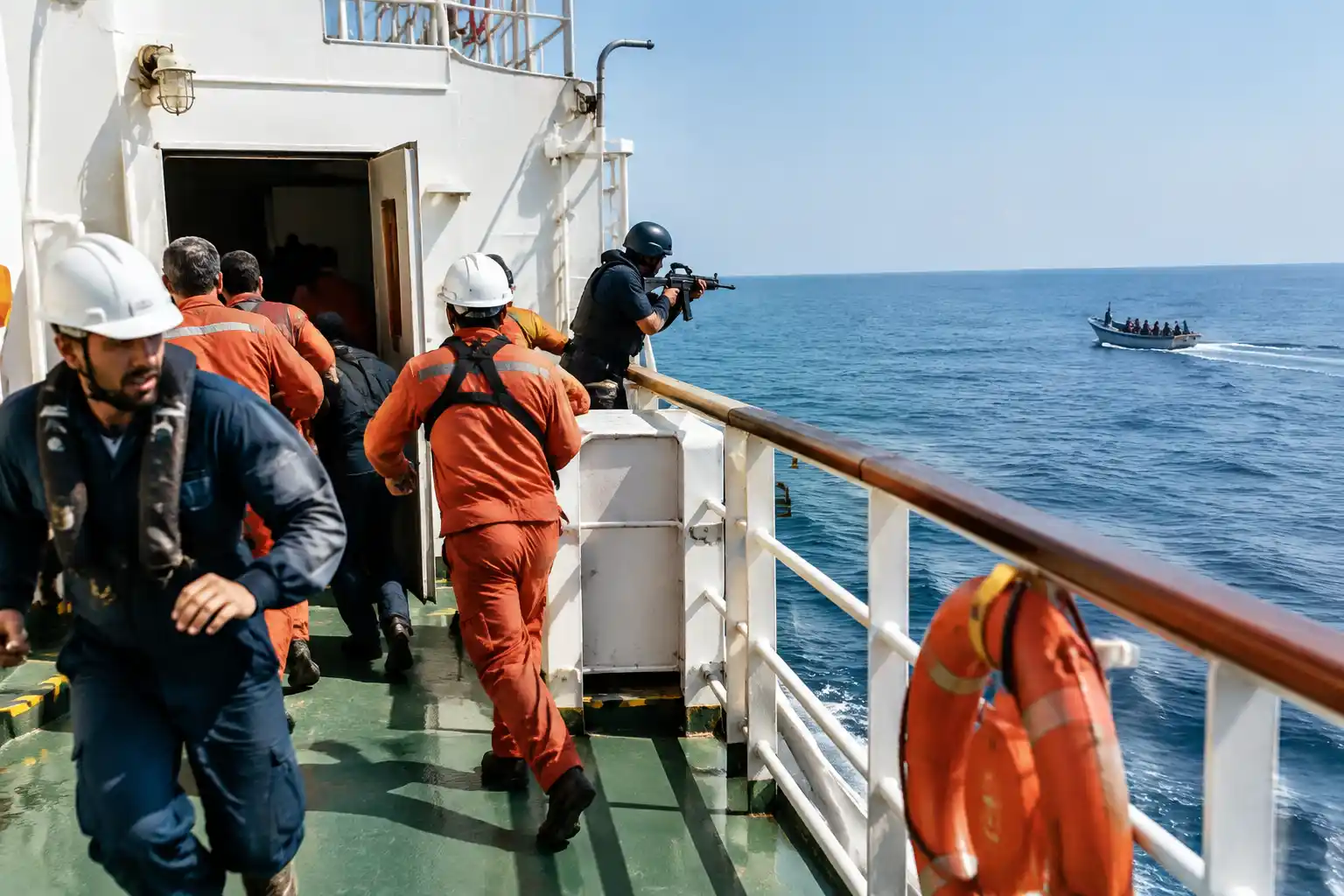
Piracy can sound like a problem from another century, but for the people who work at sea it is still a real and present danger. Ships are boarded at anchor, crews are threatened at knifepoint, and in the worst cases seafarers are held hostage for months. This piracy survival guide for seafarers explains where the threat stands today, why Somali waters have become the most dangerous of all, and what you can do to protect yourself before, during and after an attack.
Piracy today: fewer attacks, but crews still at risk
International law draws a line between two kinds of attack. Piracy is an attack on a ship on the high seas, outside any country’s territorial waters. Armed robbery against ships is the same kind of violence, theft or detention committed inside a country’s waters, including at anchor or in port. For the crew, the danger is the same, and both are counted in the global figures.
According to the International Maritime Bureau (IMB), there were 38 incidents of piracy and armed robbery worldwide in the first half of 2026. That is the lowest figure for that period since 1992, down from 90 in the first half of 2025 and 60 in 2024. In those incidents, 27 vessels were boarded, 5 were hijacked, 3 were fired upon and 3 more attacks were attempted. 67 crew members were taken hostage.

The threat looks different in each part of the world:
- Singapore Straits: four vessels were boarded. Crew were threatened, briefly held and in one case injured.
- Manila anchorage: eight incidents, up from none a year earlier. Ships at anchor were boarded by robbers armed with guns and knives.
- Gulf of Guinea: once the world’s worst piracy hotspot, with frequent crew kidnappings, it recorded just two incidents.
- Somalia and the Gulf of Aden: far fewer incidents than Asia, but by far the most serious. This is where ships are hijacked and crews are held for ransom.
In short, there are three broad kinds of attack: theft from ships at anchor, kidnapping of crew members, and hijacking of the whole ship for ransom. The last is the most dangerous for seafarers, and it is back. The IMB has warned that there is “no room for complacency” and that crew safety remains at risk.
Somalia: piracy is back and turning deadly
Somali pirates were responsible for 94% of all crew taken hostage worldwide in the first half of 2026. Four vessels were hijacked in the region in April and May alone, and more attacks and suspicious approaches followed.

On 29 September 2026, Puntland security forces stormed the hijacked tanker Honour 25 off Somalia. By the time the shooting stopped, five of her crew were dead and four were wounded. Among those killed was Mohammed Tanweeruz Zaman, the ship’s cook from Kolkata. The crew had been held for about five months.
Accounts of what happened differ. Puntland police say the pirates killed the crew before the operation began. A surviving Pakistani sailor says the pirates refused a deadline to surrender, and one of them panicked and fired at hostages tied to the deck rail. Either way, it is reported to be the first time in many years that seafarers have been killed in Somali piracy incidents, and the IMO Secretary-General has called for renewed international action.
Because Somali waters are now the greatest danger to crews, the rest of this guide focuses on them: the rules for Indian seafarers, the precautions to take before you sail, what to do if pirates attack, the dos and don’ts if you are taken hostage, and your rights while you are held.
How Somali pirates operate
The pattern is familiar from the last Somali piracy wave, more than a decade ago:
- Mother ships: pirates seize a fishing vessel or dhow and use it to launch fast skiffs far from the coast.
- Heavy weapons: attackers usually carry automatic rifles and rocket-propelled grenades.
- Hijack for ransom: ships are taken to the Somali coast and held for months while ransom is negotiated, supplied by networks ashore.
- Soft targets: many recent victims are small, slow, low-sided tankers and cargo ships, often with no armed guards.

Attacks are not limited to the Somali coast. The tanker Asana was seized in July about 65 nautical miles off Al Mukalla in Yemen and taken towards Somalia. In early October, 22 seafarers were still held on board, even as 44 seafarers were freed from three other ships.

For Indian seafarers: what DGMA requires
India’s Directorate General of Maritime Administration (DGMA) issued Circular 40 of 2026 in late July as piracy surged. It applies to Indian-flagged ships and to foreign-flagged ships carrying Indian seafarers in the Gulf of Aden and off the Horn of Africa. Shipowners, managers, Masters, Company Security Officers and RPSL agencies are told to:
- Follow the latest Best Management Practices throughout the High Risk Area. (The circular refers to BMP5. In 2025, BMP5 was replaced by BMP Maritime Security, which carries the same core advice.)
- Carry out a ship security risk assessment before entering the area, and update and implement the Ship Security Plan.
- Keep a continuous, effective lookout.
- Make sure the crew can be secured in the citadel if the ship is attacked, with communications, access control and anti-boarding measures working before entry.
- Hold regular anti-piracy drills and security briefings.
- Register the transit with the maritime security reporting centres.
- Monitor advisories from DGMA, the Indian Navy, the IMO, UKMTO and MSCHOA.
By August, DGMA had confirmed that at least 16 Indian seafarers were being held by pirates across several ships. It also pointed to a success story: in July, the crew of the MV Golden Arsenal kept a proper lookout, followed their Ship Security Plan and locked themselves in the citadel when pirates approached. An Indian Navy warship responded, the pirates fled when its helicopter arrived, and marine commandos secured the ship. The citadel works when it is used in time.

Emergency contacts for Indian seafarers:
- DG Communication Centre: dgcommcentre-dgs@nic.in | WhatsApp/Call: +91 86575 49760 | Alternate: +91 22 22613606, +91 86575 49752
- IFC-IOR (Indian Navy Information Fusion Centre – Indian Ocean Region): ifc-ior.gurugram@navy.gov.in | +91 124 2208385
Your right to refuse and extra pay. The southern Red Sea, Bab el-Mandeb and the Gulf of Aden are an IBF Warlike Operations Area. On IBF-covered ships, that means you can refuse to sail there, with repatriation at the company’s cost and two months’ basic wage, or receive a war-zone bonus and doubled death and disability cover if you go. Our guide to war zone rights for seafarers explains these rights in full.
Before you sail: precautions that save lives
Most hijackings succeed because pirates get on board before the crew is safe. Preparation decides the outcome.
Check the ship before you join
- Ask whether the ship will transit the High Risk Area and what protection it carries: razor wire, fire hoses, lighting, a citadel, armed guards.
- Small, slow, low-freeboard ships are the most vulnerable. Ask what the company has done to reduce that risk.
- Indian seafarers should join only through a DGMA-licensed RPSL agency, so there is someone accountable at home if things go wrong.
Check the citadel
- It should hold the whole crew for three to five days, with its own water, food, sanitation, lighting and power.
- It must have two-way communications with the company and naval forces that do not depend on the bridge.
- Know the route to it from your cabin and your workplace, in the dark.
Prepare yourself
- Make sure your next-of-kin details are up to date with the company and your manning agent.
- Leave copies of your contract, CDC and passport with your family, along with the names of the ship, company, agent and your union.
- Carry a supply of any regular medicines. In captivity, medical care may be scarce for months.
- Save the emergency numbers above, and agree with your family who they should call if they hear the ship has been attacked.
When pirates approach
Every second counts. Follow the Master’s orders and the drills you have practised:
- Raise the alarm and make sure everyone hears it, including those off watch and in the engine room.
- Report the attack to UKMTO and the company. Indian ships and crews should also alert the DG Communication Centre and IFC-IOR.
- Do not go out on deck to fight the pirates or watch them. Exposed crew are in the line of fire.
- Move to the citadel immediately when the Master orders it. The last person in locks the internal doors on the way.
- Count every crew member, including the bridge team and anyone in the engine room, before the citadel door is secured.
- Stay in the citadel until the pirates have gone or the military gives the agreed safe word. That can take days.
Naval forces generally need all crew accounted for inside the citadel, with two-way contact, before they board. If even one crew member is left outside, a rescue becomes far more dangerous for everyone.
If pirates take control: dos and don’ts
If pirates reach the crew before they are secured, the priority changes to one thing: staying alive until release. The Best Management Practices set out how to behave as a hostage.
Do:
- Stay calm and keep your self-control, even when you are frightened.
- Stay together as a team where you can, and keep the ship’s chain of command.
- Accept the pirates’ authority for now. Follow instructions without delay.
- Try to keep communication normal and respectful with your captors. Let the Master or a nominated person speak for the crew.
- Conserve water, food and medicines, and keep yourself as clean as you can to avoid illness.
- Keep a routine: count the days, exercise in small ways, pray or meditate, and support crewmates who are struggling.
- Remember that people are working for your release: your company, your government, your union and international agencies.
Don’t:
- Don’t resist or argue with the pirates, or with fellow crew in front of them.
- Don’t take photographs or videos, and don’t hide phones or valuables. Discovery can provoke violence.
- Don’t drink alcohol or take drugs, even if offered.
- Don’t bargain for personal privileges or try to negotiate your own release.
- Don’t try to escape or overpower the pirates unless the Master decides it is the only way to save lives. Heroics often get people killed.
- Don’t spread rumours or post about the ship if you get access to a phone. It can endanger the crew and the negotiations.
During a rescue operation
The Honour 25 shows that a rescue is one of the most dangerous moments of all. Soldiers storming a ship cannot instantly tell crew from pirates. If you hear an assault begin:

- Get down, as low to the deck as possible, and cover your head with both hands.
- Keep your hands visible and empty. Make no sudden movements that could look aggressive.
- Do not run towards or away from the boarding team.
- Expect to be challenged, restrained or separated by nationality until your identity is confirmed. Cooperate fully.
- Don’t take photographs, and don’t touch ship equipment unless told to.
- Speak up clearly when asked who you are, and point out injured crewmates.
Your rights while you are held
Being taken hostage does not end your contract. Since 26 December 2020, the Maritime Labour Convention (MLC) has said:
- Your employment agreement continues while you are held captive on or off the ship, even if its end date passes.
- Your wages and entitlements must continue to be paid for the whole period of captivity, until you are released and repatriated. If a seafarer dies in captivity, pay continues to the date of death.
- Your right to repatriation does not lapse while you are held captive as a result of piracy or armed robbery.
On IBF-covered ships in a Warlike Operations Area, compensation for death and disability is doubled. If your ship is not IBF-covered, check your contract and any national collective agreement.
For families at home:
- Contact the shipping company and the manning agent first, and ask for a named contact and regular updates.
- Indian families can also contact the DG Communication Centre and the seafarer’s union.
- Make sure allotments and wages continue to be paid during captivity, as the MLC requires.
- Be careful with unknown callers or social media posts claiming news about the ship. Share information only with the company, authorities and union.
- Free, confidential 24-hour support is available from ISWAN’s SeafarerHelp for seafarers and their families.
After release
Release is not the end of the ordeal. Seafarers freed after months in captivity often suffer injuries, illness, weight loss and trauma.
- Get a full medical check-up, even if you feel fine.
- Ask for psychological support. Nightmares, anxiety and anger are normal reactions, and help works best when it starts early.
- Keep records of injuries, medical treatment and unpaid wages to support any claim.
- Talk to your union before signing any settlement or release papers.
A quick checklist for the Gulf of Aden and Somali waters
- Indian seafarers: join only through a licensed RPSL agency and know DGMA Circular 40.
- Know whether your ship is IBF-covered: you may refuse the voyage or receive war-zone pay.
- Know the route to the citadel, and check it is stocked for three to five days.
- Take part in every drill seriously.
- Update next-of-kin details and leave document copies at home.
- Carry your regular medicines.
- Save the DG Comm Centre, IFC-IOR, union and company numbers.
- If attacked: alarm, report, citadel, headcount, stay inside.
- If captured: stay calm, stay together, don’t resist, conserve water, keep a routine.
- During a rescue: get down, hands on head, hands visible, no sudden movements.
The bottom line on piracy survival for seafarers
The deaths on the Honour 25 are a reminder that piracy is not a problem of the past. Ships that follow the Best Management Practices, keep a sharp lookout and get their crews into the citadel in time are rarely taken. If the worst happens, calm behaviour, discipline and teamwork give you the best chance of coming home.
Know the rules, practise the drills, and never hesitate to raise a safety concern before your ship enters pirate waters.
This article is for general information only and is not legal or security advice. Always follow your Master’s orders, your Ship Security Plan and the latest guidance from DGMA, UKMTO and naval forces in the region.
This article was prepared with the help of Internet Search and AI assistance tools.
Sources
- Five seafarers killed as crackdown on Somali pirates proceeds, The Maritime Executive
- IMO Secretary-General mourns seafarers killed in rescue of hijacked ships, The Maritime Executive
- Indian among 5 seafarers killed by Somali pirates months after hijack of oil tanker Honour 25, The Week
- Family pleads for return of Indian sailor killed on ship seized off Somalia, Arab News
- Pakistani sailor recalls long ordeal, The Express Tribune
- Maritime piracy incidents fall to lowest since 1992, but risk remains, ICC International Maritime Bureau
- IMB warns vessels off Somalia coast amid piracy resurgence, The Star
- India orders enhanced vigilance for ships with Indian seafarers in Gulf of Aden (DGMA Circular 40 of 2026), Marine Insight
- DGMA advisory on piracy in the Gulf of Aden and Horn of Africa, India Shipping News
- 16 Indian sailors held hostage by pirates in Gulf of Aden, DGMA confirms, Telangana Today
- BMP Maritime Security (Best Management Practices), BIMCO
- Best Management Practices Maritime Security (BMP MS), West P&I
- Merchant Shipping Notice 08/2020: 2018 amendments to the MLC, 2006 (via IRClass)
- ITF list of designated risk areas with applicable benefits (as of 11 May 2026)
- Somali Forces Capture Pirates and Rescue Seized MT Honour 25 Tanker, CrewMirror
- Indian Seafarer Among Five Killed During Somali Anti-Piracy Crackdown, CrewMirror
- Three Pirate-Held Ships Freed, 44 Seafarers Rescued, CrewMirror