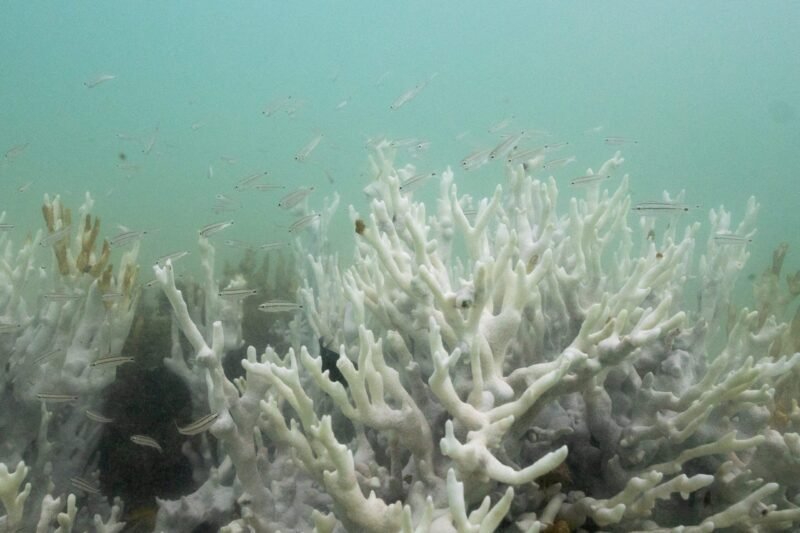
Global warming is reaching alarming thresholds more rapidly than anticipated, leading to an almost irreversible decline of the world’s coral reefs, which scientists recently identified as a critical “tipping point” in climate-induced ecosystem deterioration. The Global Tipping Points report, produced by 160 researchers, highlights these urgent findings as the COP30 climate summit approaches in Brazil’s Amazon rainforest, an ecosystem also at risk, especially if temperatures rise beyond 1.5 degrees Celsius due to ongoing deforestation.
Additionally, the report raises concerns about the potential disruption of the Atlantic Meridional Overturning Circulation (AMOC), a vital ocean current that regulates winter temperatures in northern Europe. According to Tim Lenton, the report’s lead author and an environmental scientist from the University of Exeter, the pace of climate change is alarming, emphasizing the need for immediate action.
On a positive note, Lenton pointed to a shift towards renewable energy. Data indicates that renewables have surpassed coal in electricity generation for the first time in 2023, offering a glimmer of hope. Nonetheless, scientists urge countries to mitigate climate-warming carbon emissions seriously.
With global temperatures having already risen by approximately 1.3-1.4 degrees Celsius above preindustrial levels, leading to the warmest years on record, the report stresses an urgent need for drastic climate action to prevent further damage, particularly to coral ecosystems that are essential for marine biodiversity.