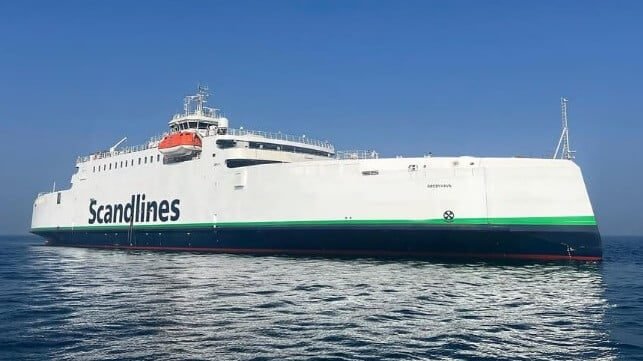
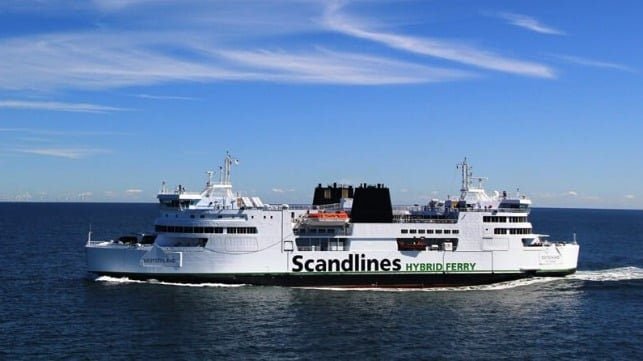
Scandlines has set a goal of achieving zero direct emissions in its ferry operations by 2040, as outlined in its sustainability report. To support this commitment, the ferry company has entered into a Memorandum of Understanding (MoU) with Caterpillar Motoren to explore the possibility of converting the current MaK diesel engines of the Rostock-Gedser hybrid ferries to run on e-methanol. The use of e-methanol, derived from renewable energy sources, has the potential to reduce CO2 emissions by up to 95% under optimal conditions.
Currently, Scandlines employs a combination of three technologies on the Rostock-Gedser route: traditional diesel operation, battery operation, and wind power. However, achieving emission-free ferry operations on this route will require the adoption of additional technology. Caterpillar Motoren is expected to provide a test engine in its workshop by 2025, with the possibility of converting the first Scandlines diesel engine by 2027 if the test engine meets expectations and requirements.
Caterpillar Marine has been investing in methanol engine technology, with plans to make its 3500E-series marine engines methanol-ready for potential conversion to dual-fuel engines in the future. The company announced in May 2024 its intention to deploy the first set of field demonstrator methanol dual-fuel 3500E marine engines with Damen Shipyards Group in 2026. In November of the same year, Caterpillar Marine received Approval in Principle from DNV for its Cat 3500E methanol-ready marine main and auxiliary engines.