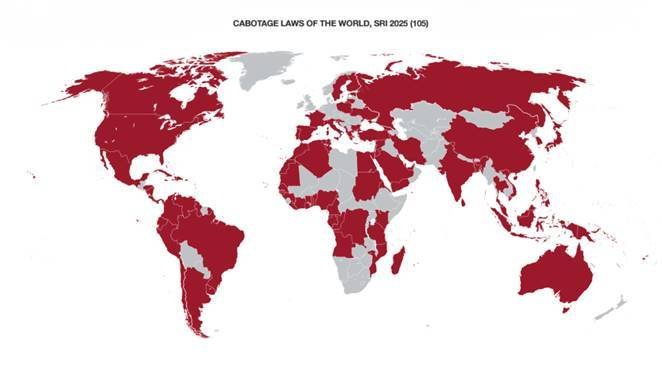
A recent study by Seafarers’ Rights International (SRI) reveals that cabotage laws now cover 85% of global coastlines and are rapidly increasing. These laws, which restrict the movement of goods and passengers within a country to domestic carriers, are becoming vital for national security and economic stability. The report, commissioned by the International Transport Workers’ Federation (ITF), shows that the number of countries with cabotage laws has risen from 91 in 2018 to 105 in 2025.
According to co-author Deirdre Fitzpatrick, nations are recognizing cabotage not just as an economic measure but as essential for strategic autonomy amid a volatile geopolitical landscape. The 105 countries studied account for a significant portion of the world’s coastlines, reflecting a shift in how cabotage is perceived globally.
In the U.S., the Jones Act governs maritime cabotage, mandating that vessels transporting cargo between U.S. ports must be U.S.-built, -owned, and -crewed. This law supports around 650,000 jobs and contributes $150 billion annually to the economy. Other nations with robust cabotage laws include South Korea, Japan, and Brazil, highlighting a growing international trend.