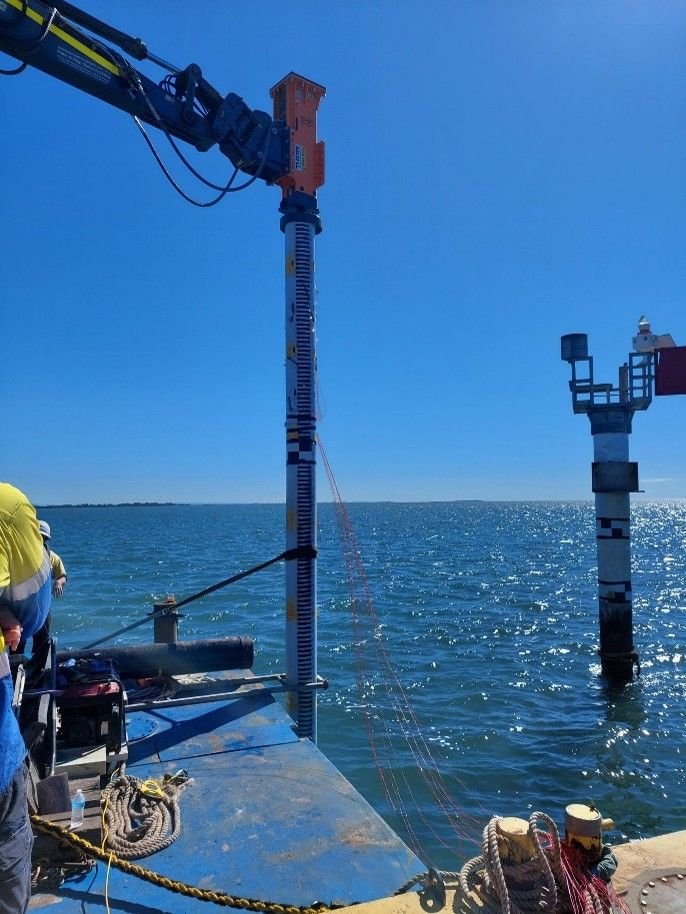
Researchers from the University of Southern Queensland (UniSQ) have spearheaded the creation of an innovative composite maritime navigation structure at Cleveland Point, aimed at enhancing the resilience and sustainability of coastal infrastructure. This new Aids-to-Navigation (A-to-N) structure replaces an aging steel installation with a fibre-reinforced polymer (FRP) composite design, which is anticipated to offer improved durability, lower maintenance needs, and better resistance to harsh marine conditions.
Led by Professor Allan Manalo and Dr. Shanika Kiriella, the UniSQ team conducted structural analysis, design, field testing, and evaluation of the new composite structure. A-to-N structures are crucial for maritime safety across Queensland’s waterways, contributing nearly $1 billion annually to the state’s economy and supporting over 4,000 jobs. Professor Manalo highlighted that traditional steel support piles are prone to corrosion, necessitating continual maintenance. The switch to corrosion-resistant composite materials could save Queensland up to $4 million in maintenance costs each year.
This installation represents a significant milestone in a project funded by the Advanced Composites Manufacturing Cooperative Research Centre, collaborating with various industry partners. Following the installation, a trial composite pile was recovered for further testing at UniSQ’s Toowoomba campus, providing insights into the real-world performance of composite materials. Dr. Kiriella emphasized that these findings will inform future design practices and increase the adoption of high-performance composites in maritime infrastructure.