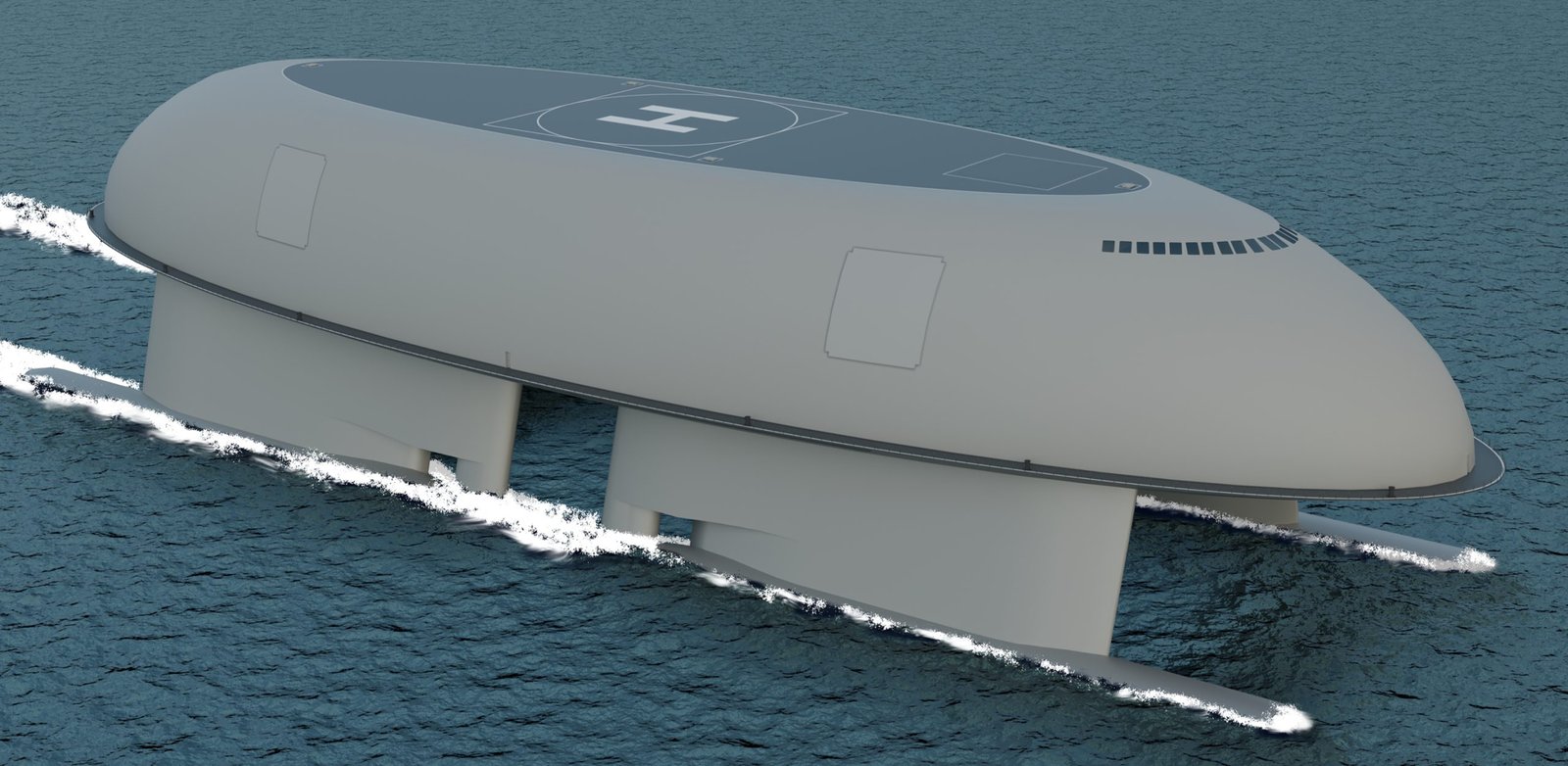
Optimal Transit has introduced Kraaken, a series of self-sufficient maritime AI data centre platforms designed to operate independently of land-based resources, the electrical grid, freshwater cooling, and traditional fuels. These platforms harness thermal energy from the ocean combined with waste heat generated by the data centre itself to produce continuous electrical power. Utilizing the innovative Digital Ocean Thermal (DOT) engine, the system effectively repurposes waste heat, using cold ocean water for cooling, enabling year-round functionality in diverse marine environments, from equatorial to Arctic waters.
Constructed on Small Waterplane Area Twin Hull (SWATH) technology, Kraaken platforms ensure stability for extensive computing needs while facilitating high-bandwidth optical and satellite communications. They can either remain permanently moored offshore or operate autonomously at sea. In the event of severe weather, these platforms can detach from their moorings and navigate at speeds nearing 30 kilometers per hour.
Scott Myers, President of Optimal Transit, emphasized that the increasing demand for power, water, and land driven by artificial intelligence necessitates innovative solutions. Kraaken’s approach leverages established marine engineering and patented technology to create a sustainable offshore data centre infrastructure. The estimated cost for a standardised 100 MW Kraaken platform is under $500 million, with annual operating expenses projected between $10 million and $20 million.
The Kraaken family includes modular designs tailored for specific computing tasks, such as the 10/20 MW vessel for edge computing and the flagship 50/100 MW model optimized for large-scale AI applications. Funding from the ongoing Series A financing is expected to support the completion of engineering drawings for the 20 MW and 100 MW platforms. Following a planned Series B financing in 2027, the company aims to establish production capabilities to deliver up to 20 Kraaken 100 MW platforms annually, each valued at approximately $400 million.
Related posts:
 Lloyd’s Register Partners with Microsoft to Use AI for Nuclear Power Regulation in Maritime Industry
 South Korea Launches Training Center for Maritime Professionals to Enhance Skills in AI and Green Technologies
 Tanker Reports Close Encounter with Somali Pirates at Sea
 IMO Awards Norwegian Diver for Courageous Rescue Effort at Sea