A recent study by Kongsberg Maritime has pinpointed several European passenger and freight routes ripe for the introduction of fully electric RoPax vessels, particularly within busy short-sea corridors in Northern Europe. The analysis emphasizes the potential for decarbonization in short-sea shipping by evaluating various ferry routes, highlighting promising candidates like Dover–Calais, Tallinn–Helsinki, and key connections in Scandinavia, Germany, and the Baltic region.
The impetus for this shift stems from advancements in battery technology, decreasing energy-storage costs, and the growing influence of EU regulations such as the EU ETS and FuelEU Maritime. These developments are making zero-emission vessels economically viable for high-frequency, short-distance routes. The study suggests that fully electric RoPax vessels operating between 2030 and 2040 could achieve lifetime costs 8 to 15% lower than diesel alternatives, despite higher initial investments, with operational cost reductions of 20 to 27% due to lower energy expenses and the elimination of emissions-related costs.
Oskar Levander, Vice President of Business Development at Kongsberg Maritime, noted the industry is at a pivotal moment, stating that battery-electric ships are now not only feasible but also commercially attractive for an increasing number of routes. The study identifies key corridors like Dover–Calais and Tallinn–Helsinki as particularly conducive to electrification due to their short distances, high usage, and supportive port conditions.
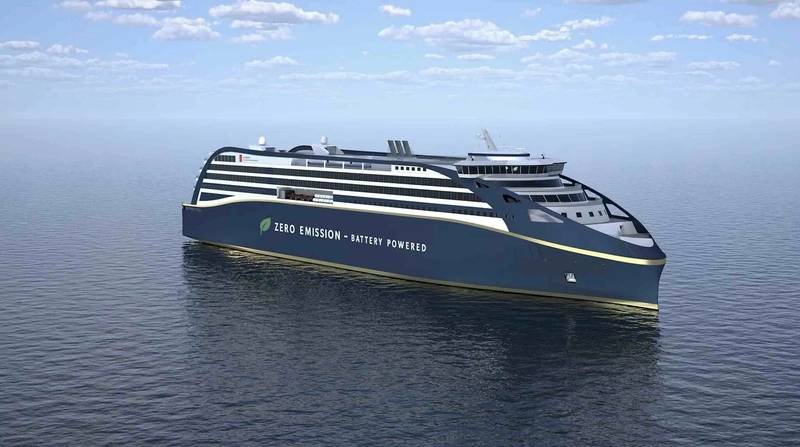
To assist operators in making long-term investment decisions, Kongsberg Maritime has created two fully electric RoPax concept designs: one focused on cargo for efficient low-speed operations and another aimed at passengers for routes with significant tourism demand. Both designs feature advanced technologies, including modular battery systems and intelligent energy management, though the study also notes challenges in port-side charging infrastructure. Levander emphasized that the conversation has shifted from whether electrification will occur to when, as many major European routes are nearing a point of technical and commercial viability for full electrification.