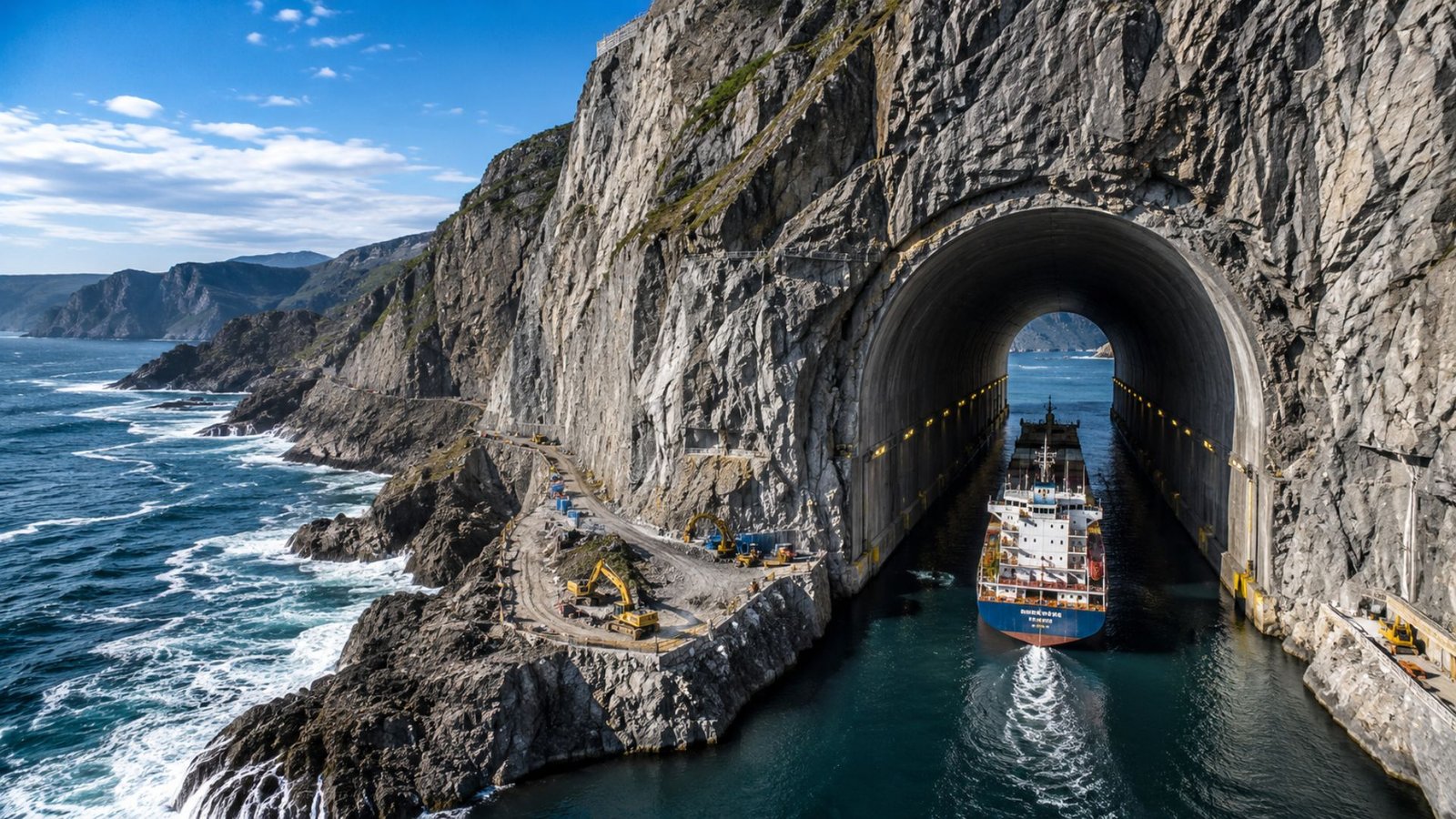
Norway is on the verge of constructing the Stad Ship Tunnel, the world’s first full-scale maritime tunnel designed to enhance safety for vessels navigating one of its most treacherous coastal stretches. This ambitious project aims to excavate around 3 million cubic meters of rock, creating a passage that will allow ships to bypass the dangerous Stadhavet area, where strong storms and unpredictable waves have claimed numerous lives. Currently, the project is on hold due to escalating costs, which have surged from an initial estimate of NOK 5 billion in 2024 to NOK 8.6 billion.
The tunnel has been a long-standing proposal, championed by engineers and sailors for over a century. A parliamentary vote on funding is scheduled for June 19, which will determine the project’s future. If approved, construction could commence in early 2027, with an anticipated completion date of 2031. The tunnel is expected to accommodate about 81% of the region’s maritime traffic, significantly improving safety by allowing vessels to avoid the perilous Stadhavet stretch.
The operational plan for the tunnel resembles air traffic control, with designated passage times for vessels. This controlled flow will prioritize commercial traffic while ensuring that smaller boats can also utilize the tunnel. With an estimated crossing time of just 10 minutes, the tunnel promises to drastically reduce the time vessels spend in dangerous waters. The decision on this transformative project hinges on parliamentary approval, making the upcoming vote critical for maritime safety in Norway.