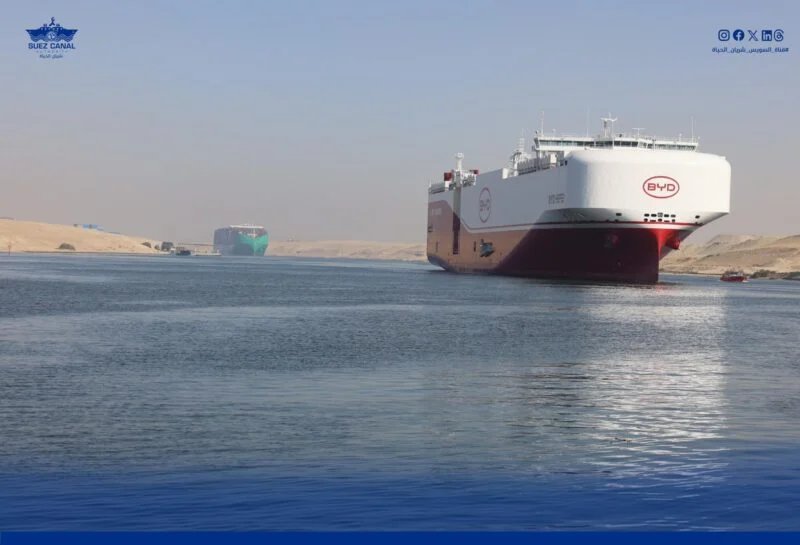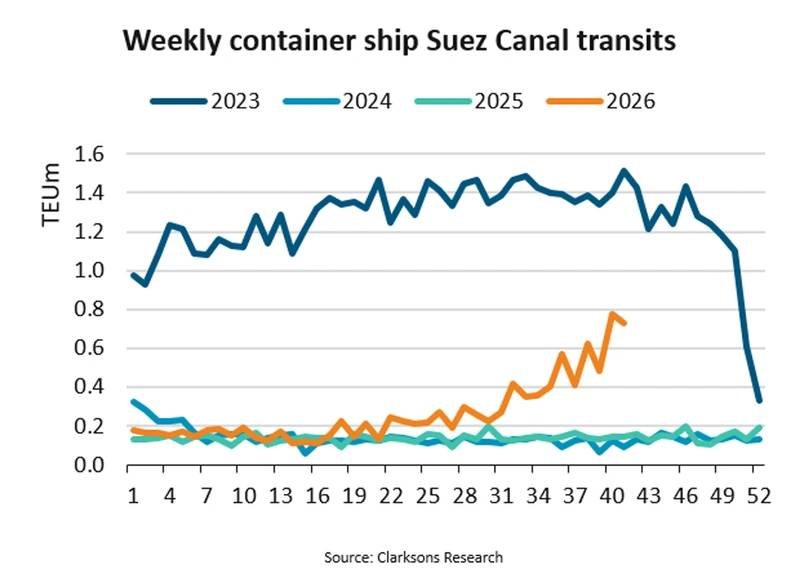
In early October, weekly container ship capacity transiting the Suez Canal averaged 753,000 TEU, a significant drop from 1,457,000 TEU during the same period in 2023. This marks the first instance since the Houthi attacks in the Red Sea that transit levels have surpassed 50% of pre-disruption figures. Following Houthi threats to target Israeli vessels, container lines began rerouting their ships away from the Suez Canal and the Red Sea, opting instead for the longer journey around the Cape of Good Hope. By the end of December 2023, weekly capacity through the Suez Canal plummeted to 330,000 TEU, compared to an average of 1,290,000 TEU for the year.
From early February 2024 until mid-2026, the average weekly container ship capacity through the Suez Canal was only 141,000 TEU, representing just 11% of the capacity recorded during the same weeks in 2023. However, the situation began to change in July 2026 when the Gemini Alliance announced a return to the Suez Canal for its Asia-Mediterranean services, leading to a gradual normalization of shipping routes.
By October, 36% of total container ship capacity routed through the canal or the Cape was utilizing the Suez Canal, a notable increase from the 8% average recorded between 2024 and mid-2026 but still far below the 80% pre-attack figure. The uptick in transits was primarily driven by southbound sailings, although northbound capacity also saw improvements. It is estimated that the rerouting away from the Suez Canal initially boosted global container ship demand by about 10%, although this increase is rapidly diminishing. The return to the canal is now coinciding with heightened port congestion in Asia, complicating the overall supply-demand balance.