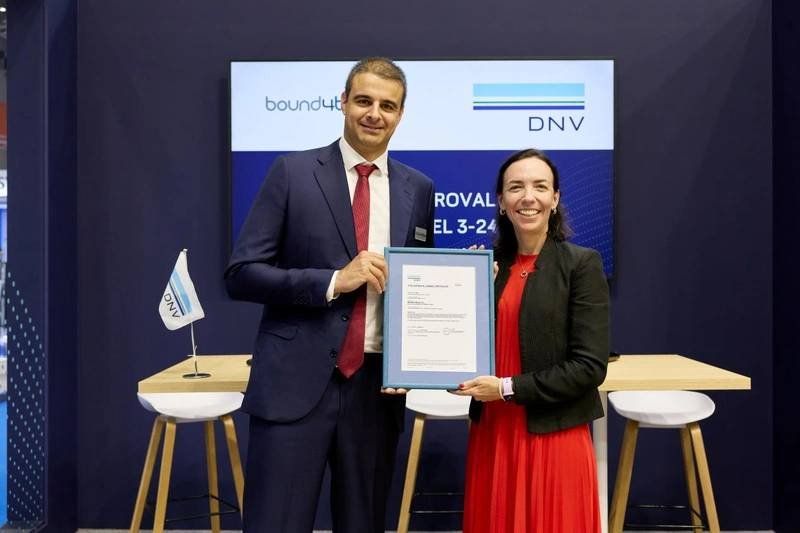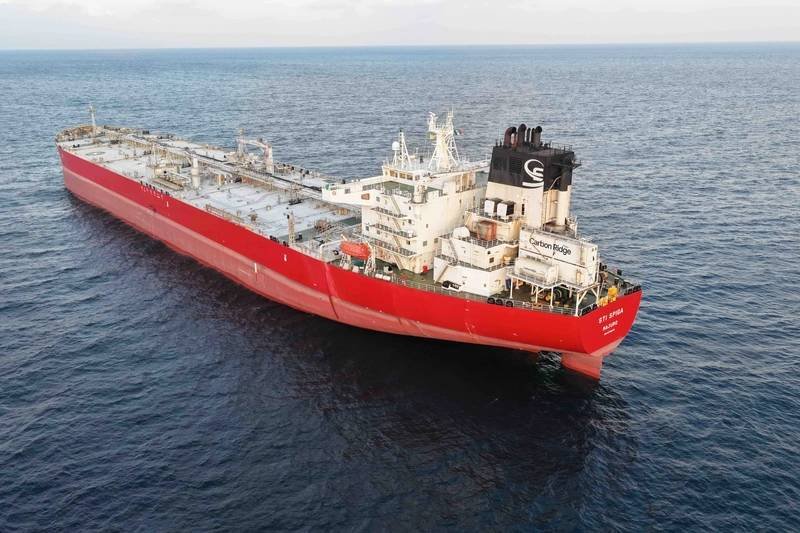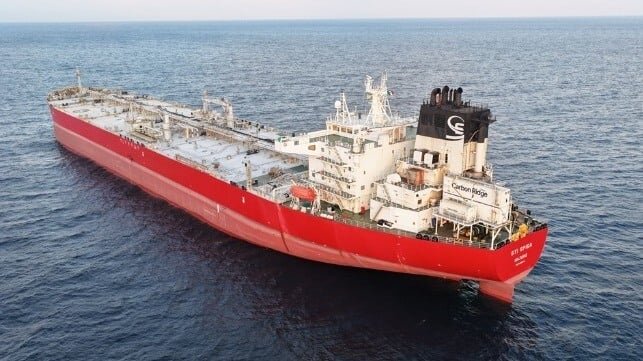
A recent assessment by DNV, a global classification society, has validated that Carbon Ridge’s centrifugal onboard carbon capture system (OCCS) can achieve CO2 capture rates of up to 98%. This marks the first maritime implementation of a centrifugal OCCS, tested aboard the LR2 product tanker STI Spiga, owned by Scorpio Tankers Inc. The five-month pilot, which began in July 2025 at Besiktas Shipyard in Turkey, monitored emissions during the vessel’s regular operations.
DNV confirmed the effectiveness of the technology by reviewing methodologies and performance metrics, finding that 55% of the observations fell within a capture range of 86–98%. Carbon Ridge CEO Chase Dwyer emphasized that these results demonstrate the potential of their modular OCCS to significantly reduce emissions from both existing and new vessels. He acknowledged the support from partners like Scorpio Tankers in deploying this essential technology.
Chara Georgopoulou from DNV Maritime highlighted the importance of independently verified carbon capture rates for developing a viable business model for OCCS. This collaboration aims to transition from periodic verification to continuous assurance using real-time data, facilitating the technology’s scalability.
Scorpio Tankers COO Cameron Mackey expressed satisfaction with DNV’s validation, noting that Carbon Ridge’s OCCS presents a compelling solution for shipowners facing increasing carbon costs or regulations. The system’s compact design reduces space requirements by up to 75% compared to traditional OCCS columns, allowing for flexible installation on diverse vessels. Captured CO2 is safely compressed, liquefied, and stored throughout the voyage, solidifying Carbon Ridge’s position as a pioneer in maritime carbon capture technology.